

✦
Where Artistry Begins
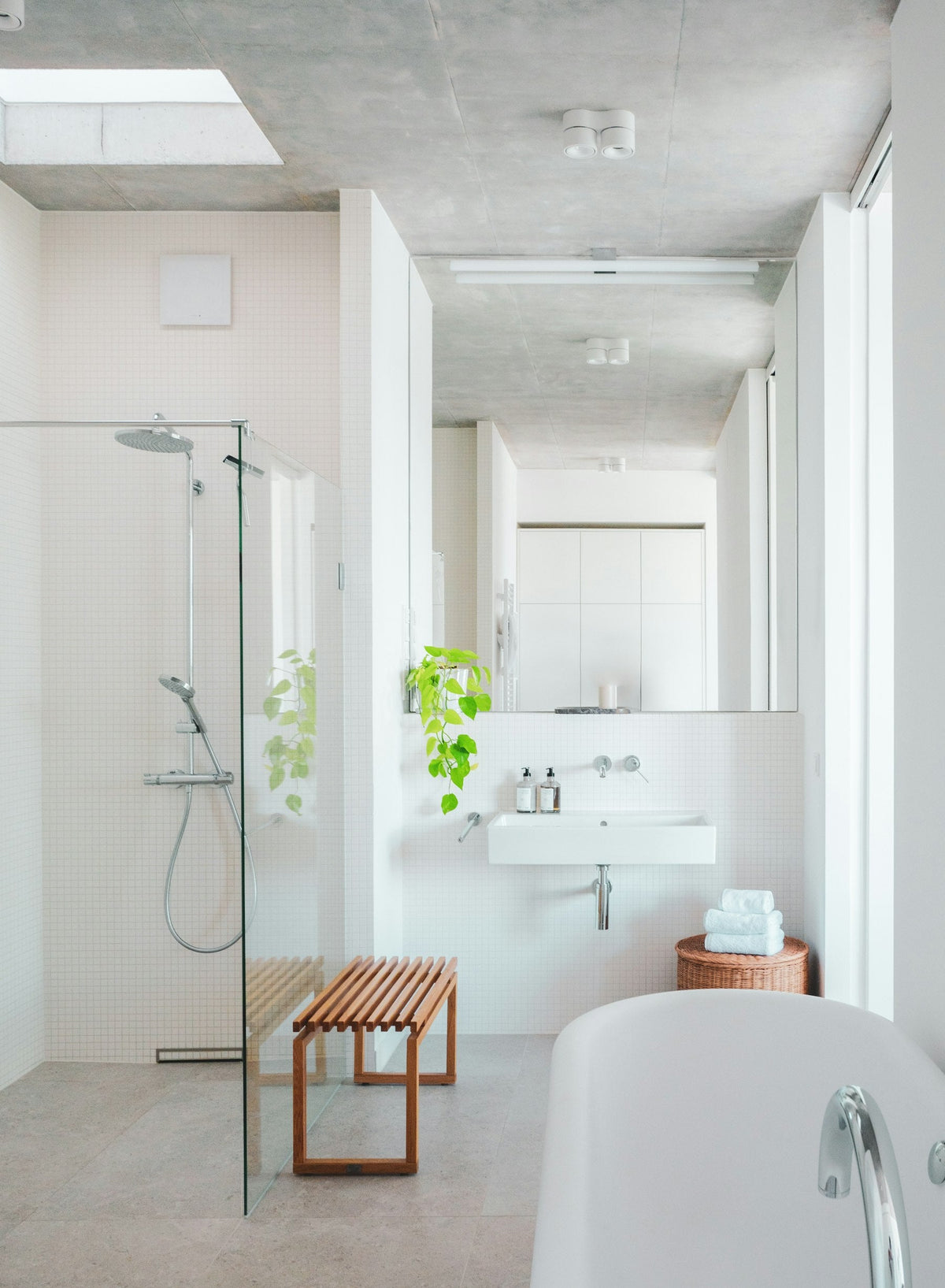
Microcement is a thin, cement based coating that is trowelled by hand over floors, walls, showers and worktops to give one continuous surface with no grout lines. It goes on in several coats, usually only a few millimetres thick in total, and is then sealed. It can go over many existing surfaces, including sound tiles, so it is often used to change a room without ripping it out. This guide explains what it is made of, where it works, where it does not, and what to ask before you commit.
Most microcement systems are a mix of cement, fine mineral aggregates, polymers or resins for flexibility and grip, and pigment for colour. The polymers are what let it go on so thin without cracking the way ordinary concrete would. Every brand has its own recipe, so always work to one manufacturer's full system rather than mixing products.
Each stage needs drying time, so a microcement bathroom takes days, not hours.
Most failures come from the surface underneath, not the microcement itself. We cover this in microcement problems and how to avoid them.
No. Polished concrete is a thick slab that is ground and polished. Microcement is a thin coating laid on top of an existing surface. The look can be similar, but the weight, thickness and installation are very different. We compare them in microcement vs polished concrete.
Lime plasters can give a similar seamless finish with a softer, more mineral feel. Zavoré stocks Pastellone for continuous lime floors and walls and Beton Stucco for a flat concrete look. If you are choosing between the two families, read Venetian plaster vs microcement.
Usually a few millimetres in total across all coats. The exact build depends on the system and the surface it goes over.
The sealer makes it water resistant, but in showers it should go over a separate waterproofing layer. See is microcement waterproof.
Kits are sold for DIY, but it is a skilled finish and mistakes are hard to undo. Read microcement kits and supplies before you buy.
Yes. Our own team lays microcement across the UK from Birmingham. See microcement installation.
A guide to how many coats limewash and limewash paint usually need, and how long to wait before each coat and before judging the colour.
Clay PlasterWhat clay plaster is, why its soft matt finish suits bedrooms and nurseries in Stockport and Trafford homes, and where it should not be u...
PortfolioPractical steps for building a decorative plaster portfolio from nothing, starting with the boards you make on a Zavoré Academy course.
BirminghamHow gilding with real metal leaf can be used in the homes, workshops and converted buildings of Birmingham's Jewellery Quarter, and what ...
KingstonPolished plaster is hard wearing, wipes clean and covers tall stair walls without joins. Here is how a hallway and stair job is planned i...
Feature WallsHow to plan a limewash paint feature wall in a modern house or flat, from picking the wall to colour and preparation.

Providing luxury finishes for the most prestigious addresses in the world
Venetian plaster, limewash, microcement, tadelakt, metallics, sculptural plaster and gold leaf, supplied and installed by our own team, with Venetian plaster taught at our Birmingham studio.
One list, run by the people who make the material. No noise, and nothing we would not want to read ourselves.
We email as the house has something worth saying, never daily. Unsubscribe from any email, or reply STOP to any text. We never pass your details to anyone.