
Venetian Plaster Samples: Testing Colour with Sample Boards
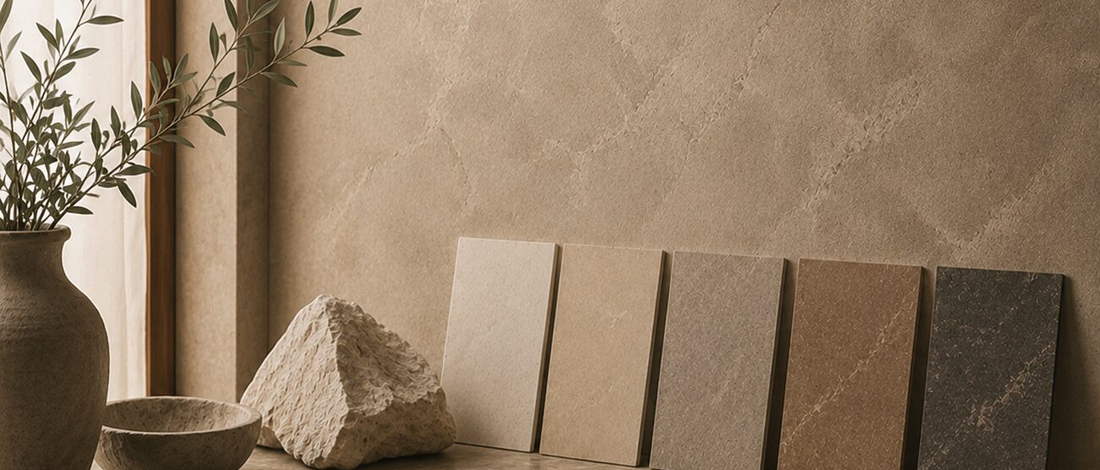
How to judge a plaster colour properly: boards in the specified finish, upright in the room, in daylight and lamplight, and never while still damp.
Read Article
Guides, finishes, colour and real projects. Everything we have learned making, teaching and trowelling authentic lime plaster in the UK. Written by the people who do the work.
Lime, marble dust and time. We explain what Venetian plaster actually is, how it differs from paint and gypsum, which finishes suit which rooms, what it costs in the UK, and how to look after a wall that should last for years.
Read The GuideWhat lime plaster is, how it differs from paint, and why it behaves the way it does in real light.
What Is Venetian Plaster?Polished plaster, marmorino, limewash, liquid metal or artificial rock, matched to the room, the traffic and the look you are after.
Compare The FinishesWhat actually drives the price of a decorative wall in the UK, and what a survey should tell you before you commit.
Read The Cost GuideHow to judge a plaster colour properly: boards in the specified finish, upright in the room, in daylight and lamplight, and never while still damp.
Read ArticleA pastellone floor is a seamless lime floor laid wet and polished as it sets. What goes underneath it, how the binder works, and wax against varnish.
Read ArticleWhich decorative plaster finishes stand up to hallway traffic, how to protect corners and seal the surface, and what changes when the wall is a stairwell.
Read ArticlePolished concrete is a ground slab; microcement is a thin coating over what you already have. Which one your building can take, and what each costs.
Read ArticleHow to pick the right wall for Venetian plaster in a living room, set the sheen from where people sit, and detail a chimney breast or media wall properly.
Read ArticleWhy bedrooms want a matt or low-sheen lime finish, which materials suit a headboard wall, how to choose colour, and how to deal with dust and marks.
Read ArticleHow to choose a grey by its undertone rather than its depth, why greige suits most British interiors, and which finishes give a concrete-adjacent grey.
Read ArticleWhy lime dries lighter than it looks wet, how to choose between a chalky white and a bright marble white, and how room light decides which one to tint.
Read ArticleHow a microcement shower tray is built: the fall and tanking underneath, the coating on top, the sealer, and the mistakes that cause leaks.
Read ArticleVenetian plaster for walls, microcement for floors and wet areas. A room-by-room guide with the truth about waterproofing, the look and what drives the cost.
Read ArticleWhy lime suits a ceiling, how to prepare emulsioned, stained and old lime ceilings, how to brush it overhead without drips, and how to pick the colour.
Read ArticleMarmorino is a lime wall plaster; microcement is a cement coating for floors and wet areas. How they compare on look, water, wear, repair and installed cost.
Read ArticleRoman clay is an American trade name, not an Italian material. What it really is, how it compares with lime Venetian plaster, and which finish gives the look you want.
Read ArticleLimewash and chalk paint look alike and are not the same material. What is in each, which breathes, how they wear, and why chalk paint belongs on furniture.
Read ArticlePolished plaster against real marble and marble-effect tiles: seams, weight, thickness, feel, repair and where the money actually goes in each.
Read ArticleTouch dry is not cured. What each drying stage means, what speeds it up or slows it down, when to wax, and when a room can go back into normal use.
Read ArticleA practical guide to Venetian plaster repair: cleaning marks, filling chips, diagnosing cracks, blending a patch and knowing when a wall needs recoating.
Read ArticleStucco veneziano is burnished lime and marble plaster. What the Italian term covers, why it is not the same as stucco in English, how it is laid and what to buy.
Read ArticleHow Venetian plaster goes onto plasterboard: flatness, board joints, suction, priming, base coats and which finishes are kindest to a new-build wall.
Read ArticleHow to specify decorative plaster on a scheme: choosing the finish, tinted samples, lead time, where it sits in the programme, handover notes and trade accounts.
Read ArticleVenetian plaster cannot go over wallpaper: the paste rewets, the paper lifts and the seams show. Here is how to strip, wash and prime the wall instead.
Read ArticleTextured paint is a thin film with grit in it. Textured plaster is the wall itself. We compare depth, wear, repair and cost, and name the finishes that deliver.
Read ArticleWhat marble powder, mica, mother of pearl, glitter, milled marbles, sand, slow-drying and adhesion additives and lime thickener do to a decorative plaster, and when th...
Read ArticleWax, sealer and waterproofer compared: what each does, which finish takes which, natural and metallic waxes, how to apply and buff, and when to re-wax.
Read ArticleWhy polished lime finishes are not made for exposed exterior walls, what happens if you try, and where a lime finish does work in sheltered outdoor spaces.
Read ArticleWhen a decorative lime finish can go straight over tiles, how the glaze is keyed and primed, what to do with grout lines, and when the tiles have to come off.
Read ArticleWhy Venetian plaster is made with marble, how the grade of marble decides the finish from polished to marmorino, and how marble-lime plaster differs from acrylic imita...
Read ArticleHow to plan a single Venetian plaster wall: which wall to choose, colour against the room, finishing edges and corners, and how the cost behaves.
Read ArticleSpecialist Venetian plaster courses are few, so near me usually means worth travelling for. What to check, how a three-day course works away from home, and getting to ...
Read ArticleHow to finish a chimney breast in Venetian plaster: heat near the opening, movement and hairline cracks, and marmorino, polished or concrete effect.
Read ArticleHow to prepare new plaster, painted walls, plasterboard and old lime for Venetian plaster, which primer to use where, and the prep mistakes behind most failures.
Read ArticleA zone-by-zone guide to Venetian plaster in a kitchen: splash zones, grease and heat behind the hob, sealing and waxing, and where tile or glass is still right.
Read ArticleHow long a lime Venetian plaster finish lasts, why it hardens with age, what wears it, and how chips, scuffs and stains are repaired without redoing the wall.
Read ArticleWhy lime finishes suit ceilings, how hard overhead work is, how raking light changes the choice of finish, and how to handle cornices and cracks.
Read ArticleHow metallic plaster moves light in a way metallic paint cannot, what burnishing does to the effect, where the finish works, and how to light it properly.
Read ArticleAn honest limewash vs paint comparison: what each is made of, breathability, depth, wear, repair, mould and why most limewash paint is really emulsion.
Read ArticleHow to apply limewash properly: brush choice, the cross-hatch stroke, surface prep, how many coats, wet edges, how the colour dries and whether to seal.
Read ArticleThe limewash problems we get called about most, with the cause and the fix: patchiness, chalking, streaking, drying too light, poor cover and flaking.
Read ArticleDecorative plaster explained: the lime, clay and cement finishes laid as the final surface, how each family differs, and how to choose the right one for a wall.
Read ArticleTwo lime finishes people confuse. Marmorino closes and burnishes; travertino stays open and pitted like cut stone. Where each one belongs.
Read ArticleLime burnished with stone and cured with soap, against a cement coating sealed with resin. Water behaviour, look, repair and which we would specify.
Read ArticleStucco means exterior render in American English and the polished interior lime finish in Italian. Here is which one a UK reader usually wants.
Read ArticleWhy a concrete effect wall in plaster carries depth and pour marks that paint cannot, where the finish suits, how to seal it, and when the cheaper tin is the right call.
Read ArticleHeat, acids, knives and sealing on a microcement worktop, plus splashbacks, sinks and edges, an honest comparison with stone and laminate, and where we say no.
Read ArticleClay dries and can be re-wetted; lime cures hard and tolerates water. How the two differ on breathability, colour and repair, and which rooms suit which.
Read ArticleWhen microcement can go straight over existing tiles and when they must come off: tapping for hollows, keying, priming, filling grout lines and what an overlay saves.
Read ArticleHow to choose limewash colours: why lime dries lighter, how pale and deep shades behave at scale, north and south light, and how to test on boards.
Read ArticleWhat a microcement floor needs to last: a sound, dry, rigid, flat substrate, movement joints carried through, underfloor heating commissioned properly, and the right s...
Read ArticleHow a sculpted artificial rock wall is built up in plaster, what the substrate has to take, where the finish belongs, and the skill it genuinely needs.
Read ArticleWhy nobody can quote microcement per square metre, what actually drives the price, how it sits against tiling and stone in relative terms, and how to read a quote.
Read ArticleTraditional Venetian plaster is slaked lime putty blended with finely ground marble dust and natural pigment. There is no plastic binder doing the work. The surface cures mineral-hard, stays breathable, and takes a polish that comes from burnishing the material itself rather than from a coating sitting on top.
Yes, with the right specification. A sealed marmorino system is our usual choice for wet rooms and basins, compacted and sealed so the surface sheds water. Kitchens and splash zones are usually finished in marmorino or polished plaster with an appropriate sealer. The substrate and the sealer matter more than the room label.
Properly installed on a sound substrate, decades. Lime plaster continues to carbonate and harden over time, so it ages rather than degrades. Most walls we return to need nothing more than a clean and, on waxed finishes, an occasional refresh.
Usually yes, provided the paint is sound and correctly primed. Existing emulsion is keyed and treated with a quartz or art primer so the plaster has something mechanical to grip. Peeling, chalky or damp walls are stripped and made good first. Skipping that step is the most common cause of failure.
Venetian plaster is dense and polished, with the depth of stone. Limewash is thin, soft and cloudy, and it settles into the wall rather than shining. Both are lime, they simply set very different moods, and they are often used together in the same project.
Yes. Every plaster, primer, wax and tool we install with is available through our shop, machine-tinted to your colour and batched to order. Students who train with us receive trade pricing on the full range.
Everything we write about is something we sell, install or teach. The materials are in the shop, the walls are in our installations, and the craft is taught at the bench.

Authentic Venetian plaster, machine-tinted to your colour and made for each order. Materials, installation and master-led training, since 2021.
One list, run by the people who make the material. No noise, and nothing we would not want to read ourselves.
We email as the house has something worth saying, never daily. Unsubscribe from any email, or reply STOP to any text. We never pass your details to anyone.