

✦
Where Artistry Begins
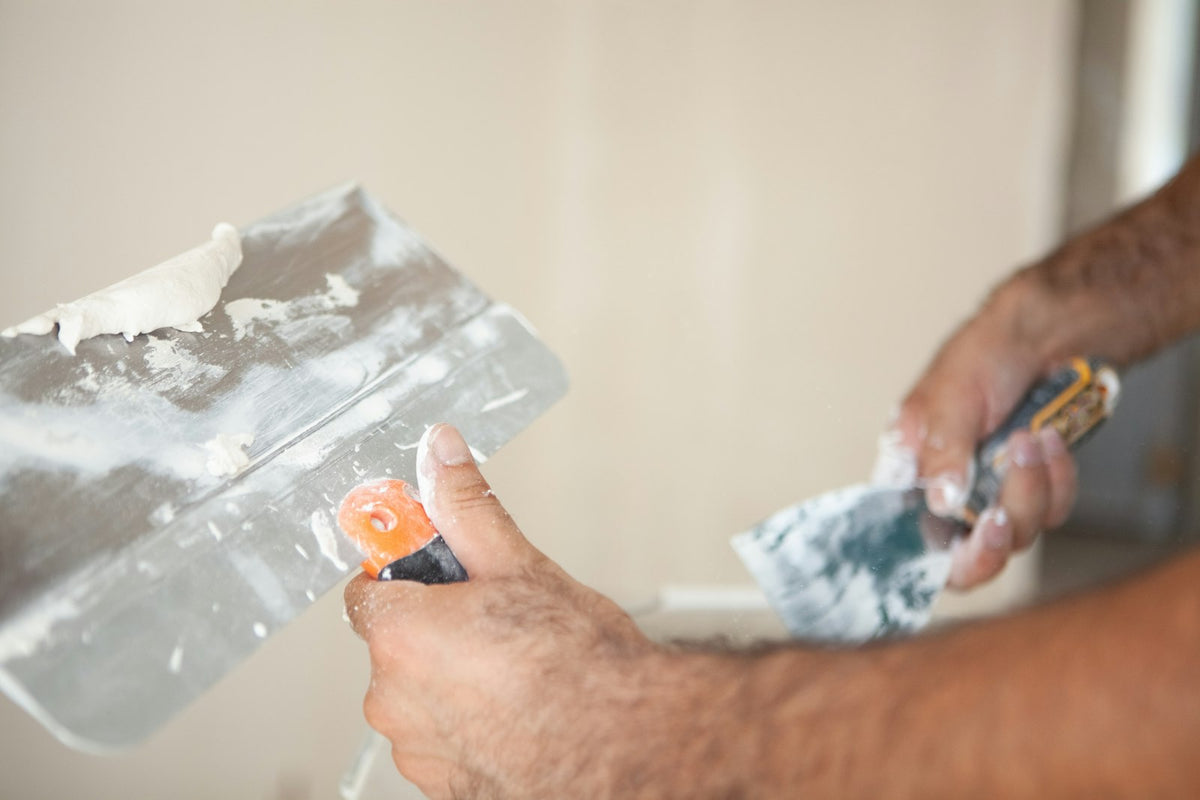
Short answer. New plaster must be fully dry before limewash paint goes on, and how you prepare it depends on whether it is modern plaster or lime plaster. Lime plaster is porous and takes limewash well once it is firm, while smooth modern skim can be less absorbent and may need a suitable base first. Always follow the instructions for the product you are using.
Most new walls in UK homes are finished with a modern skim, often over plasterboard. Modern plaster is pink or pale grey when wet and sets quickly. Older homes and restoration work may use lime plaster instead, which is softer, more porous and sets slowly by taking in carbon dioxide from the air.
If you are not sure, ask the plasterer. The answer changes the next steps.

Fresh plaster holds a lot of water. If you paint too soon, that water has to escape through the paint, which can cause patches, poor bonding and blooms of salts on the surface. A new skim usually needs several weeks to dry, and longer in a cold or damp room or when it is thick. A good sign is an even colour across the whole wall with no darker damp patches.
Our guide on how long plaster takes to dry sets out what affects drying time.
A modern skim trowelled very smooth can have a closed, almost polished surface. Lime products prefer something that can soak them in. Because of this.
If you are using Zavoré's Lime Paint, ask us which base suits your wall before you start.
Lime plaster and limewash belong together. Traditionally, limewash was brushed onto lime plaster once it was firm, so the two could bond as they carbonated. New lime plaster should be protected from drying too fast, from frost and from strong heat. Gently damping the wall with a mister before each coat helps the limewash bond and dry evenly.
New lime plaster can take a long time to cure fully, so expect the colour to keep changing slowly for a while.
The first coat often looks thin and patchy. That is normal for lime. Keep coats thin, work into the surface with a large brush and avoid heavy build up in corners. Let each coat dry before the next. Our guide on how to apply limewash covers brush work in more detail.
To check your colour on a real lime surface first, order a sample board. You can also call 07592 929191 or email sales@zavore.co.uk, or read about our limewash installation if you would like us to do the work.
Some products allow a thinned first coat on new plaster, but this varies. Follow the product instructions rather than standard emulsion advice.
Patchiness on new plaster usually comes from uneven drying or uneven suction across the wall. Thin, even coats on a fully dry surface help.
Only to remove nibs and splashes. Do not sand it smooth and shiny, and brush off all dust before the first coat.
A practical guide to polished plaster and other decorative finishes in Kent homes, with room ideas and how Zavoré runs a Kent job from Bi...
KentKent's older homes, from Wealden hall houses to converted oasts, have walls that need to breathe. Here is how lime plaster and Marmorino ...
BirminghamHow time at the trowel helps interior designers specify Venetian plaster with confidence, and which Zavoré Academy training suits a desig...
Birmingham and SolihullRoom by room advice on Venetian plaster and other finishes for homes across Birmingham and Solihull, from a studio based in the city.
AdvancedWho the 4 day Advanced Course is for, each topic in plain terms, how it differs from the Beginner Course and the help you get to win a fi...
FAQStraight answers to the questions people ask about Venetian plastering training at the Zavoré Academy in Birmingham, from experience to t...

Providing luxury finishes for the most prestigious addresses in the world
Venetian plaster, limewash, microcement, tadelakt, metallics, sculptural plaster and gold leaf, supplied and installed by our own team, with Venetian plaster taught at our Birmingham studio.
One list, run by the people who make the material. No noise, and nothing we would not want to read ourselves.
We email as the house has something worth saying, never daily. Unsubscribe from any email, or reply STOP to any text. We never pass your details to anyone.