

✦
Where Artistry Begins
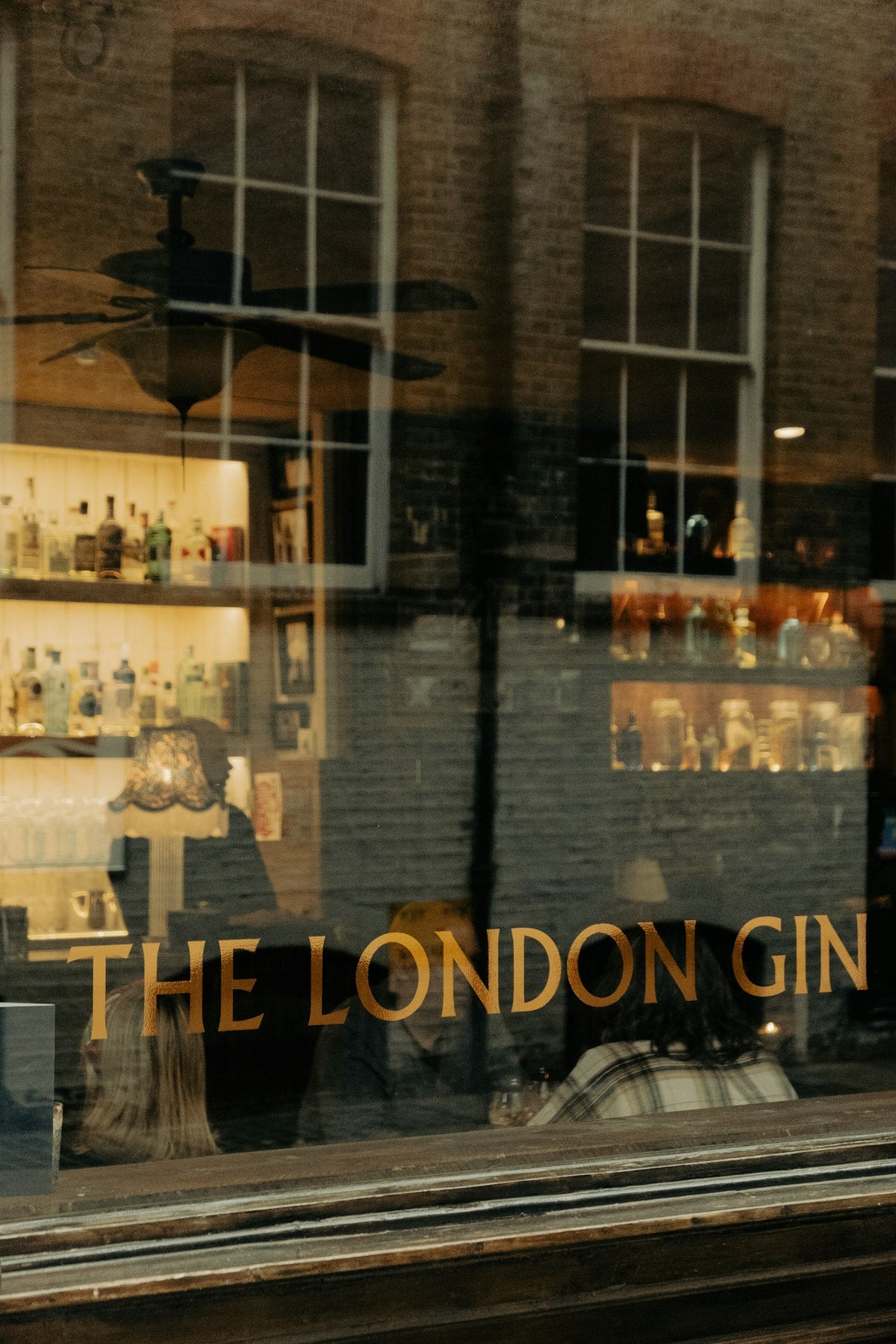
Verre églomisé is the art of decorating glass from behind, usually with gold or silver leaf. The leaf is laid on the back of a sheet of glass, a design is drawn or engraved through it, and the back is then covered with paint or another layer of glass, so the gilding is seen through the front, bright and protected. Britannica defines it as glass engraved on the back after being covered with unfired painting or, usually, gold or silver leaf. The same reverse gilding is what traditional signwriters use for gold leaf lettering on shop windows and glass doors.
Here we look at where the name comes from, how glass gilding is done, where you see it, and how to look after it. We have checked the history against Britannica and the method against signwriters' and gilding suppliers' guidance.

The phrase is French. Verre simply means glass, and églomisé comes from a person's name. In everyday use, verre églomisé describes any decorative panel where gold or silver leaf, often combined with paint, is applied to the reverse face of glass to give a shining, mirror like finish. The design is worked in reverse, so what the maker sees from behind is a mirror image of what you see from the front.
Because the decoration sits behind the glass, the glass itself becomes a protective cover. The leaf is never touched or wiped, which is a large part of why gilded glass can stay bright for so long.
The technique is named after Jean-Baptiste Glomy, an eighteenth century French picture framer who died in 1786. Britannica explains that he used the process on the glass mounts of pictures, decorating them with a combination of plain colour and gilding, and his name stuck to the method.
The technique itself is much older than Glomy. Britannica traces it back to late antiquity and Early Christian times. It was revived in Italy between the fourteenth and sixteenth centuries, used in Holland and Spain in the seventeenth and eighteenth centuries, and became popular in France, England and the United States in the eighteenth century. Gilded and painted glass appears on picture frames and clock cases, and in the late eighteenth century as decorative panels on mirrors in the style associated with Sheraton.

Glass gilding is a form of water gilding, but instead of gesso and bole the adhesive is a weak solution of gelatine in water. Signwriters' guides describe the steps in a similar order.
The finish depends on the gold and the size. Gilding on glass with gelatine can be very bright and reflective, and many signs combine the gold with painted outlines, shading and colour.
Historically, verre églomisé appeared on picture mounts, clock faces and cases, panels set into mirrors and frames, furniture, and small panels set into reliquaries and portable altars. In more recent history the same reverse gilding became a staple of window signs and advertising mirrors, on shop fronts, pubs and office doors.
Today it is still used for exactly those things, as well as for decorative panels in interiors, including mirror surrounds, cabinet doors and wall panels where a gilded pattern seen through glass gives depth that paint alone cannot.

Gold leaf sign writing on glass is the form of glass gilding most people meet every day, even if they have never heard the term verre églomisé. Window lettering is applied to the inside of the glass and read from the street, so the gold is shielded from rain and cleaning while still catching the light.
Zavoré lays gold leaf lettering and signs on boards and on glass, as part of our gilding work across the UK, including London, Birmingham and Manchester. If you are thinking about a gilded glass panel or an églomisé style piece for a mirror, a cabinet or a wall, ask us and we will talk through what is possible for your project.
Because the gold sits on the back of the glass, the front can be cleaned like ordinary glass with a soft cloth and a mild glass cleaner. Take more care with the back. Avoid scraping, abrasive pads, blades and strong solvents anywhere near the gilded side or its backing paint, and keep it dry. On a shop window, that means the inside face, so make sure anyone cleaning the windows knows where the lettering is.
Antique pieces of verre églomisé are fragile and often irreplaceable. If one is chipped, flaking or loose in its frame, it is best looked at by a specialist before anything is cleaned or refixed.
Roughly vair ay glom ee zay. Many people simply call it reverse gilding or gilding on glass.
Traditional window signs are gilded with genuine gold leaf, often 23 carat. High carat gold does not tarnish, which suits work that is meant to last for years.
Working on the inside face means the gilding is protected by the glass itself from weather and from daily cleaning, while the letters are still read clearly from outside.
We lay gold leaf lettering and signs on glass. For decorative glass panels, ask us about your idea and we will tell you honestly what we can do.
Where to go next. See our gilding service, follow our guide on how to apply gold leaf, compare water gilding and oil gilding, or read about gilded mirror restoration. To talk about a sign or a panel, get in touch, email support@zavore.co.uk or call or WhatsApp 07592 929191.
How to choose between gold, silver, copper and imitation metal leaf, covering gold leaf karats and colour, white gold, tarnish and sealin...
GildingWater gilding lays leaf on gesso and bole and can be burnished to a mirror shine, while oil gilding uses oil size and suits walls, mouldi...
DIYA gilder's step by step guide to oil gilding, from preparing the surface and judging the tack of the size to laying loose or transfer lea...
GuidesTrompe l'oeil is painting that fools the eye. We trace it from Roman Pompeii to Mantegna and Pozzo, explain how the illusion works, and s...
CorniceHow to read the period of a cornice in a Georgian, Victorian or Edwardian house, what separates cornice from coving, and how damaged runs...
Buying GuideWhat a ceiling rose is and where it came from, how to size one to the room and the light, which styles suit which period, how to fit one ...

Authentic Venetian plaster, machine-tinted to your colour and made for each order. Materials, installation and master-led training, nationwide and international, since 2021.
One list, run by the people who make the material. No noise, and nothing we would not want to read ourselves.
We email as the house has something worth saying, never daily. Unsubscribe from any email, or reply STOP to any text. We never pass your details to anyone.