

✦
Where Artistry Begins
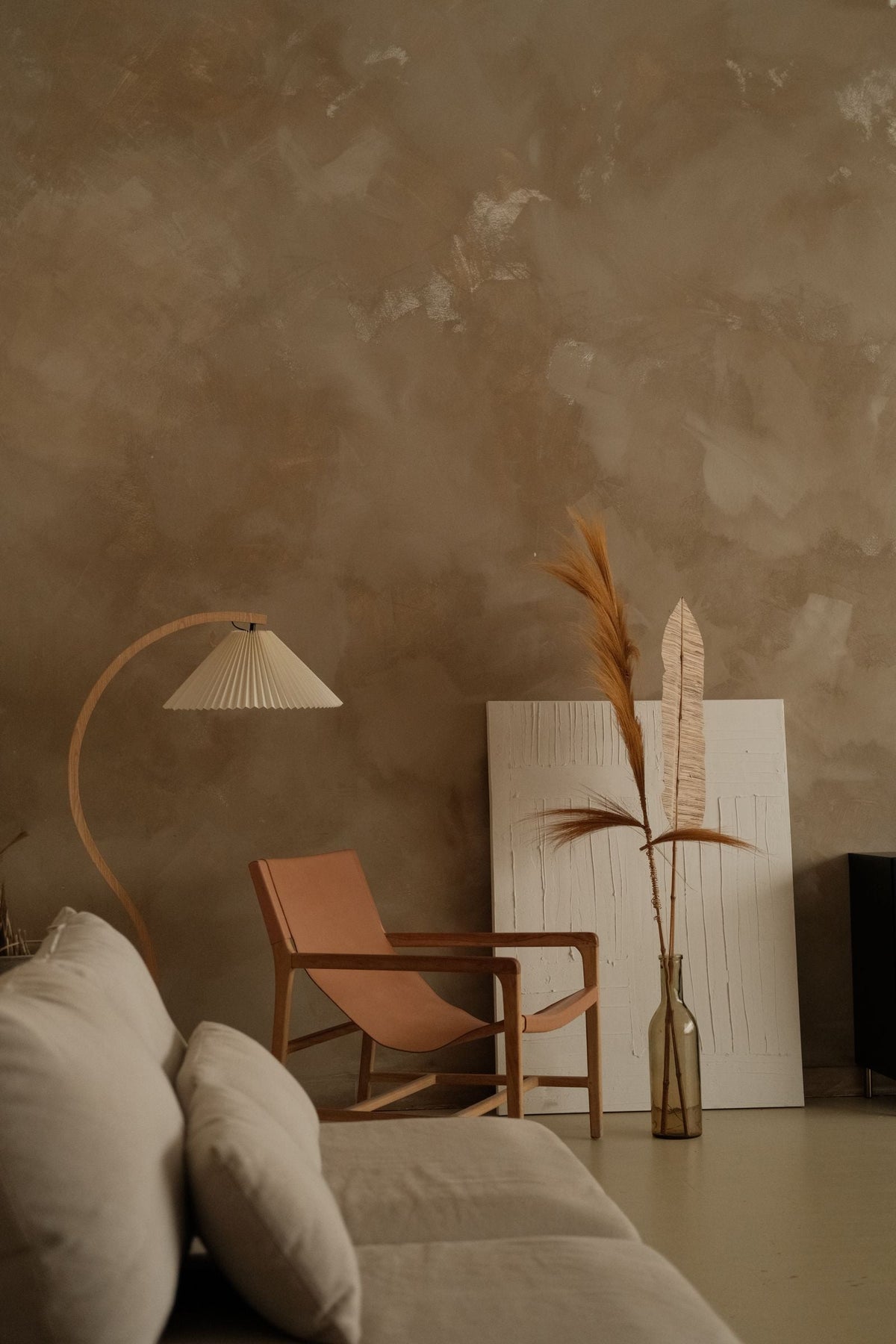
Short answer. Most people stay at home while a polished plaster or limewash finish is installed. The room being worked on is out of use, but the rest of the home carries on. Floors and furniture are protected, the work is calmer than building work, and the main things to plan are access, somewhere for tools and material, and keeping people and pets away from wet walls.
Laying the finish itself is quiet, steady trowel work rather than drilling and cutting. Any noisy or dusty preparation, such as filling or sanding, happens first. The team arrives at an agreed time each day, works through the coats and leaves the room protected overnight.
The team will need a tap for clean water and somewhere to wash tools each day. If the only sink is in your kitchen, tell us and we will plan around it. We also agree in advance which rooms and routes the team will use, so you know which parts of the home stay yours.
The room stays out of use until the finish is dry enough to be safe. How long that takes depends on the finish and the room; our guide to drying and curing explains the difference between touch dry and fully cured.

Fresh plaster marks easily, and lime based materials should be kept away from skin and eyes. Keep children and pets out of the room while the work is going on and until the team says the wall can be touched. A closed door and a note for visitors is usually enough.
Flats add a few practical points.
If the room is your only bathroom or kitchen, plan ahead. A tadelakt or microcement shower cannot be used until it has been finished, sealed or soaped, and given time to cure, so you may need to use another bathroom for a period. We explain the timings for your finish at the site visit, so you can plan around them.
Doing one room at a time is often easier for families than doing the whole house at once, but it does mean more visits. For homes further from Birmingham, grouping rooms into one block of days is usually more practical. Our Venetian plaster installation page lists the rooms we work in most.
If you are planning work around family life or a busy building, call 07592 929191 or email sales@zavore.co.uk and tell us what you need to keep running. Order a sample board to choose your colour first, and see what we install on our installation page.
Laying the finish is much cleaner than building work. Any dusty preparation is done first, and floors and furniture are protected throughout.
Usually not. The room should stay out of use until the team says the finish is dry enough, to avoid marks and knocks.
Check your lease and your building rules. Some blocks ask for notice or consent before any contractor works inside a flat.
The things an applicator should allow for when pricing a limewash job, and how to ask Zavoré about limewash training.
InstallationHow a decorative plaster installation fits into a renovation with a builder and other trades, and what order the work should happen in.
InstallationA practical checklist for homeowners getting a room ready before Zavoré applicators arrive to lay a decorative plaster finish.
InstallationA plain guide to what our applicators look at on a site visit before quoting for a decorative plaster installation, and how to get the mo...
LimewashA guide for applicators to the common faults in limewash work, their causes and how to put them right, plus how to ask about limewash tra...
InstallationHow to photograph and measure your walls so Zavoré can give you useful early advice, and why a visit usually comes before the final quota...

Providing luxury finishes for the most prestigious addresses in the world
Venetian plaster, limewash, microcement, tadelakt, metallics, sculptural plaster and gold leaf, supplied and installed by our own team, with Venetian plaster taught at our Birmingham studio.
One list, run by the people who make the material. No noise, and nothing we would not want to read ourselves.
We email as the house has something worth saying, never daily. Unsubscribe from any email, or reply STOP to any text. We never pass your details to anyone.