

✦
Where Artistry Begins
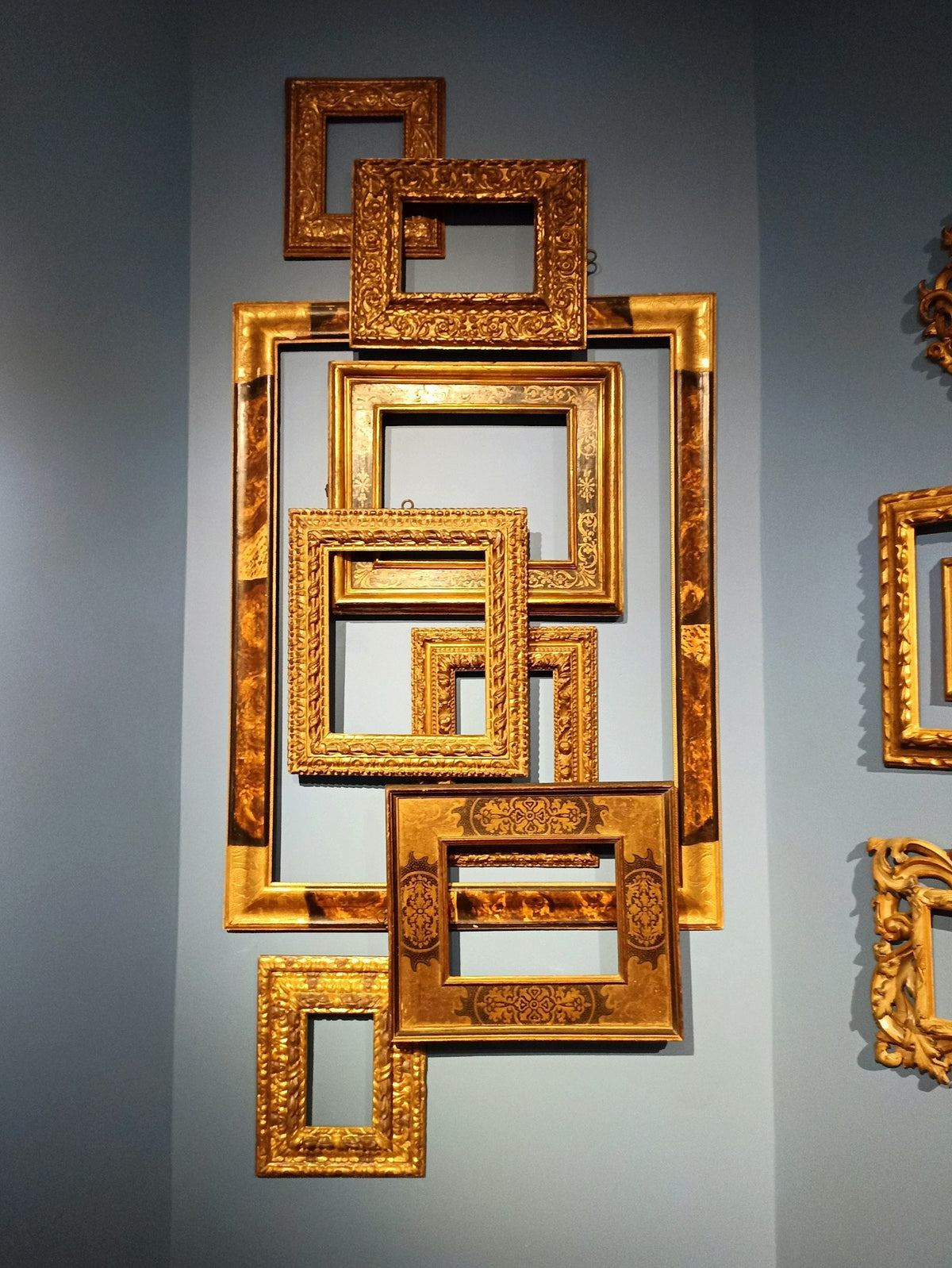
A gilded mirror or frame needs very little care, and most damage comes from too much of it. Dust it gently with a soft brush once in a while, keep it away from damp walls, radiators and fires, and never wipe it with a wet cloth or spray. If the gold is flaking, lifting or has been touched up with gold paint, leave it alone and ask a gilder or conservator, because restoring gilding is a job of consolidation, careful regilding and toning, not a quick coat of something shiny.

Before you clean or repair anything, it helps to know what you have. True gilding is real metal leaf, beaten so thin it is almost translucent, laid over a prepared ground. Gold leaf does not tarnish, so even an old frame keeps a clear, bright sheen where the gold survives. Look closely and you may see faint straight lines where one square of leaf overlaps the next.
Gold paint, often called bronze paint, is made from metal powders in a binder. The Institute of Conservation (Icon) describes it as a muddy, slightly granular, streaky coating against the bright sheen of real gold leaf. These powders are not gold, so they can oxidise and turn brown or green over time.
Some old frames were finished with metal leaf or bronze paint from the start, so a darker area is not always a later repair. If the piece matters to you, let a professional decide what is original before anything is removed.
Most good antique frames and mirrors were gilded in one of two ways, and the difference matters for cleaning.
The wood is built up with many layers of gesso, a mixture of chalk and animal glue, then coated with bole, a fine coloured clay, often red or yellow. The gilder wets the bole, which reactivates the glue, and lays the leaf on top. According to the Royal Collection Trust, the bole is slightly springy, so selected areas can be burnished with an agate stone to a mirror bright shine and set against matt areas. The catch is that everything under the gold is held together with glue that water softens, so water can lift the leaf and the bole with it.
Oil gilding uses an oil based adhesive called size. The leaf is laid when the size is almost dry but still slightly tacky. It cannot be burnished, so it has a softer, more even glow, but it is tougher and copes with water far better, which is why it is used on outdoor gates and architectural ornament. If you would like the full comparison, read our guide to water gilding vs oil gilding.

Icon advises that dusting about once a year is enough, because even gentle dusting slowly wears a gilded surface. When you do clean, keep it simple.
Gilded mirrors, frames and gold leaf furniture tend to suffer in the same few ways.

Good restoration keeps as much of the original gold as possible and only adds what is needed. A typical sequence looks like this.
The aim is that you see the mirror, not the repair.
If a mirror or frame is old, valuable, of historic interest or simply precious to your family, ask an accredited conservator before anything is done. Icon has a Find a Conservator directory listing its accredited members, who have been vetted by the institute. Call one straight away if you see active woodworm, gilding lifting in flakes, or water damage.
Zavoré offers hand gilding in gold, silver and copper leaf, including new gilding and restoration of mirrors, frames, furniture and objects, using water gilding and oil gilding. For a decorative mirror, a modern frame or a piece you want to bring back to life, we are happy to look at it. For an important antique, we will tell you honestly if a conservator is the better choice.

No. Water can soften the glue under water gilding and lift the gold away. Use a soft dry brush, and leave anything more to a gilder or conservator.
We would advise against it. Metal powder paints rarely match real gold, they can darken over time, and removing them later adds work and risk to the original surface.
Not always. Many antiques look best with their age showing. A full regild suits pieces that are badly damaged or purely decorative.
Yes. Zavoré gilds furniture, frames, mirrors and objects by hand, as well as walls, ceilings and mouldings. See our guides to how to apply gold leaf and to gold, silver and copper leaf for more.
Where to go next. Visit our gilding page to see what we gild and restore, read about verre églomisé for gilded glass, or get in touch with a photo of your mirror or frame. You can also call or WhatsApp 07592 929191, or email support@zavore.co.uk.
Verre églomisé is gold or silver leaf applied to the back of glass. We look at the name and its link to the framer Jean-Baptiste Glomy, h...
Buying GuideHow to choose between gold, silver, copper and imitation metal leaf, covering gold leaf karats and colour, white gold, tarnish and sealin...
GildingWater gilding lays leaf on gesso and bole and can be burnished to a mirror shine, while oil gilding uses oil size and suits walls, mouldi...
DIYA gilder's step by step guide to oil gilding, from preparing the surface and judging the tack of the size to laying loose or transfer lea...
GuidesTrompe l'oeil is painting that fools the eye. We trace it from Roman Pompeii to Mantegna and Pozzo, explain how the illusion works, and s...
CorniceHow to read the period of a cornice in a Georgian, Victorian or Edwardian house, what separates cornice from coving, and how damaged runs...

Authentic Venetian plaster, machine-tinted to your colour and made for each order. Materials, installation and master-led training, nationwide and international, since 2021.
One list, run by the people who make the material. No noise, and nothing we would not want to read ourselves.
We email as the house has something worth saying, never daily. Unsubscribe from any email, or reply STOP to any text. We never pass your details to anyone.