

✦
Where Artistry Begins
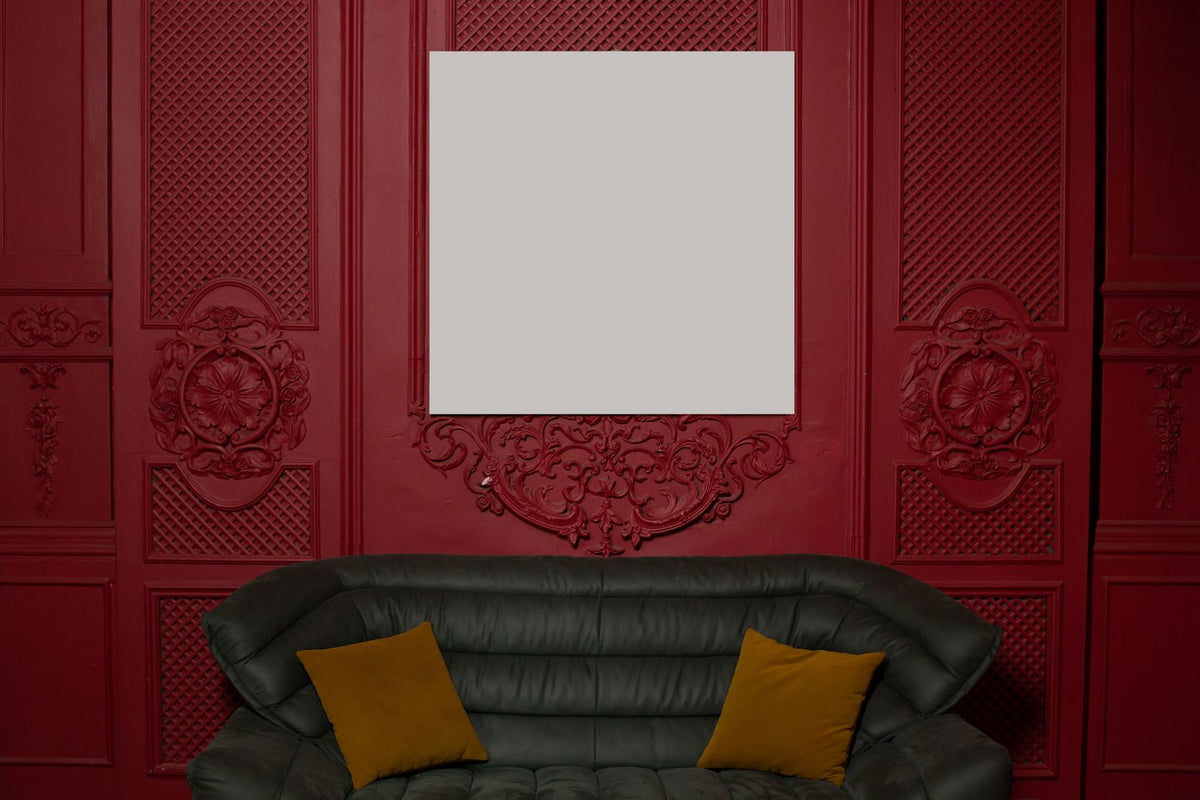
A lacquered wall is a wall finished to a deep, high gloss shine that reflects light almost like glass. It is not simply a coat of gloss paint. A true lacquer finish is built up in thin coats over a perfectly flat surface, rubbed down between coats and polished at the end, so the colour looks deep and liquid rather than just shiny. It suits dining rooms, hallways, libraries, small rooms and ceilings, and it rewards careful preparation more than almost any other wall finish.

The word lacquer first meant the natural lacquer of East Asia, made from the sap of the lacquer tree and used for centuries in China and Japan on furniture, boxes and screens. Britannica describes it as a coloured, highly polished and opaque type of varnish, applied in many thin layers that are each dried and smoothed before the next. You can read more about that tradition in our article on urushi and the history of lacquer.
Today, lacquer paint and lacquer finish are broader terms for modern hard, glossy coatings. On a wall, lacquered usually describes the effect rather than one product, meaning a smooth, mirror like surface with real depth of colour. At Zavoré, our lacquered walls and ceilings are a modern high gloss system, built up coat by coat, rubbed down between coats and polished to a mirror finish.
Gloss shows everything. A flat matt paint scatters light and hides small dents, bumps and filler marks. A high gloss surface reflects light back at you, so every ripple, pinhole or sanding scratch shows up as a wobble in the reflection. The paint maker Resene puts it plainly in its guidance on gloss levels, warning that glossy paints on walls and ceilings will highlight surface imperfections.
That is why a lacquered wall is mostly about preparation. Before any colour goes on, the wall needs to be sound, dry and as flat as it can be made. In practice that means the following.
Old houses with wavy walls can still be lacquered, but you should expect more preparation, and the reflection will honestly follow any gentle curves that remain.

People searching for gloss paint for walls are often after the lacquered look, so it helps to be clear about the difference.
Ordinary gloss paint is usually used on woodwork such as doors, skirting and windows. Rolled or brushed onto a wall, it gives shine, but it also shows roller texture, brush marks and every flaw in the plaster. Gloss walls done this way can look patchy and plastic rather than polished.
A high gloss lacquer finish is about the process as much as the material. The surface is prepared to a much higher standard, colour is built up in thin coats, and each coat is rubbed down before the next. The final polish gives an even, deep reflection without visible texture. It takes longer and needs skilled hands, which is why it is usually done by specialist decorators rather than as a weekend project.
Resene notes that the higher the gloss level, the more light bounces off a painted surface, which changes how a colour appears. In our view, deep, saturated colours benefit most.
Lacquer also sits well beside gold, a pairing with real history, as the room at Schönbrunn below shows. Think of gilded mouldings, a gilded cornice or ceiling rose, or gold leaf picking out panel mouldings against a dark gloss wall.

Lacquer has decorated grand rooms for a long time. At Schönbrunn Palace in Vienna, the Vieux Laque Room is lined with Chinese black and gold lacquer panels, originally made as screens for the European market, cut down and set into richly gilded panelling. After the death of Emperor Franz I Stephan in 1765, Maria Theresa had it rededicated as a memorial room to him. Modern lacquered walls borrow that sense of depth and glow, using a smooth, painted high gloss finish rather than imported panels.
If you want sheen with a softer, more natural feel, polished Venetian plaster is another route. Our feature wall ideas compare several finishes side by side.
Resene points out that glossy finishes are easier to clean than flatter paints, thanks to their smooth surface. To keep a lacquered wall at its best, follow a few simple rules.

You can get a shiny wall, but the depth and flatness of true lacquer come from the preparation, the thin coats and the rubbing down and polishing between them.
Yes, gloss reveals any unevenness. That is why so much of the work happens before the colour goes on.
No. Traditional East Asian lacquer is a natural tree sap. Zavoré's lacquered walls are a modern high gloss system inspired by its look.
Yes. Zavoré lacquers walls and ceilings, and works across the UK, including London, Birmingham and Manchester.
Where to go next. See our lacquered walls page for how we work, explore gilding to pair with it, or get in touch to talk about your room. You can also call or WhatsApp 07592 929191, or email support@zavore.co.uk.
How to tell real gold leaf from gold paint, the difference between water and oil gilded frames, how to clean a gilded mirror safely and w...
GildingVerre églomisé is gold or silver leaf applied to the back of glass. We look at the name and its link to the framer Jean-Baptiste Glomy, h...
Buying GuideHow to choose between gold, silver, copper and imitation metal leaf, covering gold leaf karats and colour, white gold, tarnish and sealin...
GildingWater gilding lays leaf on gesso and bole and can be burnished to a mirror shine, while oil gilding uses oil size and suits walls, mouldi...
DIYA gilder's step by step guide to oil gilding, from preparing the surface and judging the tack of the size to laying loose or transfer lea...
GuidesTrompe l'oeil is painting that fools the eye. We trace it from Roman Pompeii to Mantegna and Pozzo, explain how the illusion works, and s...

Authentic Venetian plaster, machine-tinted to your colour and made for each order. Materials, installation and master-led training, nationwide and international, since 2021.
One list, run by the people who make the material. No noise, and nothing we would not want to read ourselves.
We email as the house has something worth saying, never daily. Unsubscribe from any email, or reply STOP to any text. We never pass your details to anyone.