

✦
Where Artistry Begins
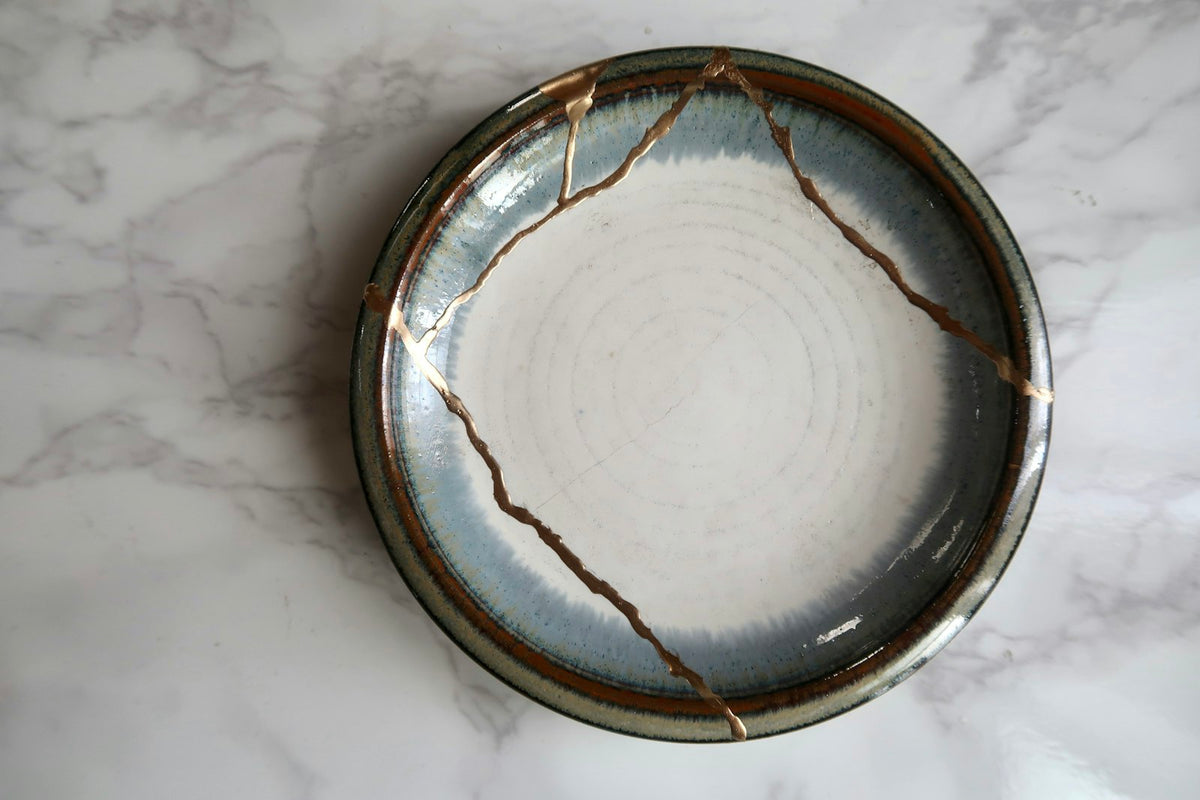
Urushi is the Japanese name for the natural lacquer made from the sap of the lacquer tree, Toxicodendron vernicifluum, which grows in East Asia. Refined and brushed on in thin coats, the sap hardens in warm, humid air into a tough, glossy film. Craftsmen in China and Japan have used it for thousands of years on bowls, boxes, furniture and screens, often decorated with gold. Modern lacquered walls borrow the look of this ancient craft, but they are a different material altogether.

The lacquer tree is native to East Asia, particularly China and Korea, and has long been cultivated in Japan, according to Britannica. Its sap is collected by cutting notches into the bark, a process the Metropolitan Museum of Art describes as taking place once a year. The V&A explains that trees are tapped only after they have grown for more than a decade. The raw sap is then gently heated to drive off excess water and remove impurities.
What makes urushi unusual is the way it sets. It does not simply dry as water or solvent evaporates. Britannica notes that it dries only in a moist atmosphere, which is why lacquerers cure each coat in a warm, humid, draught free cabinet. Once fully hardened, the film resists water, acids, alkalis, alcohol and moderate heat, which is why lacquered objects have survived for so long.
The lacquer tree is a close relative of poison ivy. Its sap contains urushiol, which can cause contact dermatitis, an itchy and painful skin rash. The Smithsonian Center for Folklife and Cultural Heritage notes that urushi is harmless once dry but can irritate the skin when wet, so artisans protect their hands with gloves while they work.
Lacquer is one of the oldest crafts in Asia. The Metropolitan Museum of Art records that items covered with lacquer have been found in China dating to the Neolithic period, and that elaborately decorated lacquer, which took enormous labour to make, appeared during the Warring States period, from 475 to 221 BC. Early pieces were mostly black or red, coloured with charcoal or cinnabar, because few pigments will mix successfully with lacquer.
In Japan, the Government of Japan's own history of lacquer describes many lacquered finds from the early Jomon period, roughly 7,000 to 5,500 years ago, including pottery, wooden containers, earrings and combs. One lacquered comb from the Torihama shell mound in Fukui Prefecture is around 6,100 years old.

Traditional lacquerwork is slow and patient. Britannica describes many thin layers being applied, allowed to dry and smoothed before the surface is ready for decoration. The Met notes that the finest pieces may need thirty or more coats, which is why good lacquer has always been costly. The base is usually wood, and between coats the surface is rubbed down so the next layer goes on perfectly smooth. The result is a surface with depth as well as shine, as if you were looking into the colour rather than at it.
Finished lacquer can then be decorated by carving, engraving, inlay or painting. Lacquer painting, using coloured lacquers on a lacquered ground, is a craft in its own right across East Asia.
Japan's most celebrated lacquer technique is maki-e, which means sprinkled picture. The Met describes it as gold or silver powder sprinkled on still damp lacquer, and calls it one of the supreme achievements of Japanese decorative art. In one version, which Britannica calls togidashi maki-e, the powdered design is covered with further coats of black lacquer and then polished back until the gold glows through. According to the Government of Japan, maki-e was being made in Japan from the eighth century onwards and flourished among the aristocracy of the Heian period, from the late eighth to the twelfth century.
Maki-e is not the same as gilding with leaf, but the two share a love of gold against a dark, glossy ground. You can read about leaf gilding in our guides to how to apply gold leaf and gold, silver and copper leaf, or see how we gild on our gilding page.

Japanese lacquer was exported to Europe from the end of the sixteenth century, and from the seventeenth century Dutch traders became the main exporters. Lacquer became so fashionable that the word japan appeared in European inventories as a general term for lacquerware.
The real material could not easily be copied in Europe, so craftsmen invented their own version, known as japanning. In 1688 John Stalker and George Parker published A Treatise of Japaning and Varnishing, a guide for English makers. Japanning built up layers of gesso and varnish on furniture to imitate Asian lacquer. Britannica notes that European lacquerwork lacks the hardness and brilliance of Asian lacquer, but japanned furniture became fashionable in its own right, made to meet a demand that imports alone could not satisfy.
Real Asian lacquer was also used in European rooms. At Schönbrunn Palace in Vienna, the Vieux Laque Room is lined with Chinese black and gold lacquer panels, originally made as screens for the European market, cut down and set into gilded panelling.
Today's high gloss lacquered walls take their inspiration from this long tradition, from the depth of colour, the glassy shine and the pairing with gold. It is important to be clear, though, that they are not urushi. Traditional lacquer is a natural tree sap, cured slowly in humidity and suited to objects and panels. A modern lacquered wall uses contemporary high gloss coatings designed for interiors.
At Zavoré, our lacquered walls and ceilings are a modern high gloss system, built up coat by coat, rubbed down between coats and polished to a mirror finish. The idea of patient layering and polishing is the same. The material is not. Read our guide to lacquered walls for how the modern finish works.

Both are made from lacquer tree sap, and both countries have used it since prehistoric times. The difference lies mostly in style and technique, which developed separately over many centuries. Japan is known above all for maki-e, its sprinkled gold decoration.
Wet urushi can cause a skin rash, so craftspeople wear gloves. Once it has fully dried and hardened, it is considered harmless.
No. Our lacquered walls are a modern high gloss system inspired by the look of traditional lacquer, not made from tree sap.
Yes. A dark lacquered wall with gilded mouldings or a gilded ceiling echoes the black and gold of historic lacquer. Zavoré offers both lacquered walls and hand gilding.
Where to go next. See our lacquered walls page, explore hand gilding in gold, silver and copper leaf, or get in touch to talk about a lacquered or gilded room. You can also call or WhatsApp 07592 929191, or email support@zavore.co.uk.
What makes a lacquered wall different from gloss paint, why preparation and flatness matter so much, and the colours, rooms and care that...
GildingHow to tell real gold leaf from gold paint, the difference between water and oil gilded frames, how to clean a gilded mirror safely and w...
GildingVerre églomisé is gold or silver leaf applied to the back of glass. We look at the name and its link to the framer Jean-Baptiste Glomy, h...
Buying GuideHow to choose between gold, silver, copper and imitation metal leaf, covering gold leaf karats and colour, white gold, tarnish and sealin...
GildingWater gilding lays leaf on gesso and bole and can be burnished to a mirror shine, while oil gilding uses oil size and suits walls, mouldi...
DIYA gilder's step by step guide to oil gilding, from preparing the surface and judging the tack of the size to laying loose or transfer lea...

Authentic Venetian plaster, machine-tinted to your colour and made for each order. Materials, installation and master-led training, nationwide and international, since 2021.
One list, run by the people who make the material. No noise, and nothing we would not want to read ourselves.
We email as the house has something worth saying, never daily. Unsubscribe from any email, or reply STOP to any text. We never pass your details to anyone.