

✦
Where Artistry Begins
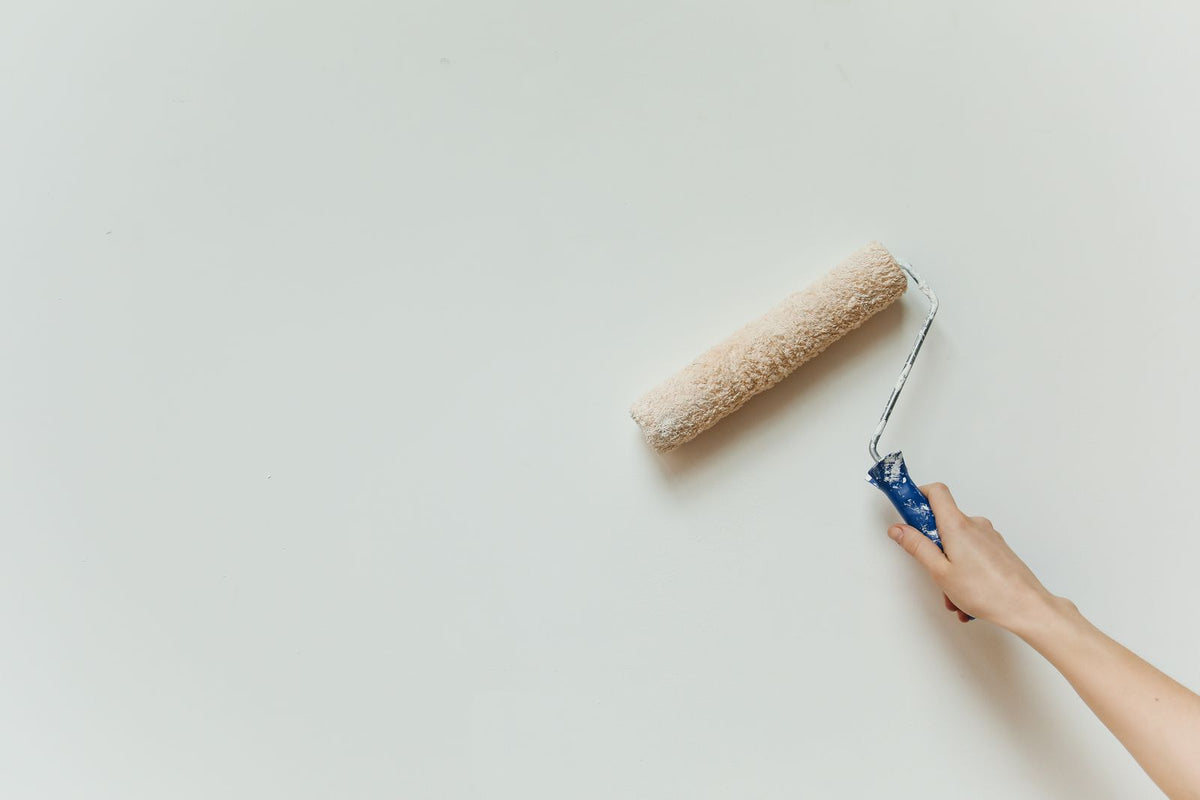
The short answer on limewash vs paint: limewash is a mineral finish made from slaked lime and pigment that soaks into the wall and hardens by drawing carbon dioxide from the air, while emulsion is a plastic binder that dries as a film sitting on top of the wall. Limewash breathes, moves in the light and ages; emulsion seals, sits flat and eventually needs stripping. Neither is better in the abstract. They are different materials that fail in different ways.
If you want it installed, our own applicators handle limewash installation from survey to final coat.
There is a third thing muddying this, and it is worth saying plainly at the start: a large share of products sold as “limewash paint” on the UK high street are emulsion with a chalky, mottled look designed into them. They are not lime. If you want the material rather than the aesthetic, check what is in the tub.
Limewash is limestone that has been burnt to quicklime, slaked with water into lime putty, thinned to a brushable consistency and coloured with alkali stable pigments. There is no plastic in it. When it dries, the water leaves and the calcium hydroxide slowly reverts to calcium carbonate, chalk, bonded into the surface of the wall. That process is called carbonation, and it is why limewash gets harder over weeks rather than minutes.
Emulsion is pigment and extender suspended in an acrylic or vinyl binder. As the water evaporates the binder particles coalesce into a continuous film. It is fast, cheap, reliable and completely waterproof on the face, which is exactly the problem on old, solid or damp prone walls.
Our tinted lime paint is the real thing, tinted to your chosen colour in the tub. If you want the material explained in full, with the look and the rooms it suits, that is the limewash page.
| Limewash | Emulsion paint | |
|---|---|---|
| Binder | Slaked lime, mineral | Acrylic or vinyl, plastic |
| How it sets | Carbonates into the surface over weeks | Film forms as water evaporates |
| Breathability | High, vapour passes through | Low to none on vinyl grades |
| Look | Chalky matt, cloudy, moves with the light | Even and flat, or a manufactured “limewash effect” |
| Application | Wide soft brush, cross hatched, thin coats | Roller, thicker coats |
| Substrate | Porous: lime plaster, brick, stone, mineral primed walls | Almost anything sound |
| Mould resistance | Naturally alkaline, hostile to mould | Depends on added biocides |
| Repair | Touch in with a full coat; blends as it weathers | Patches usually flash unless the wall is recoated |
| Wear pattern | Wears thin and softens; can chalk | Scuffs, marks, then peels when it fails |
| Cost per tub | Higher | Lower |
This is the real dividing line. A solid brick or stone wall with no cavity handles moisture by letting it move in and out. Put a vinyl emulsion on the inside face and the moisture has nowhere to go: it collects behind the film, the plaster softens, salts come through and the paint blisters off. Limewash lets the wall dry to the inside.
On a modern, dry, plasterboard wall this argument is largely irrelevant. Nobody needs breathable paint on a new build partition. Choose limewash there for the look, not for the physics, and be honest with yourself about which one you are buying.
Emulsion gives you one flat colour across the whole wall. That is its job and it does it well. Limewash gives you a surface that reads differently across a wall and differently through the day, because the film thickness varies with the brush and the pigment settles unevenly by design. Deeper colours cloud more; pale ones are subtler but still alive.
That variation is the reason people buy it and the reason some people are disappointed by it. If you want a wall that looks identical everywhere, buy emulsion. Notes on how the colour behaves are on our colours page, and the same principles we set out in choosing colour for Venetian plaster apply.
Emulsion fails at the film. It scuffs, it takes knocks, and when it finally goes it peels, which means scraping and full redecoration. Limewash fails by thinning. A worn patch looks worn rather than broken, and you can brush a fresh coat over the area or the whole wall without stripping anything. Fresh limewash also blends into old limewash far better than fresh emulsion blends into old emulsion.
On mould: lime is strongly alkaline, and mould does not enjoy an alkaline mineral surface. That is a genuine, long standing property of the material, not a marketing claim. It is not a cure for a damp problem. Fix the damp, but in a cool north facing room or an older cottage it is a meaningful advantage over a sealed plastic film.
The trade off is chalking. Lime can leave dust on your hand, particularly if it was laid on too thickly or has been over thinned. Well applied limewash on a properly prepared wall settles down.
Limewash costs more per tub than trade emulsion and takes longer to apply properly, because it wants two thin brushed coats and a wet edge held across the whole wall. Against that, a limewashed wall can be refreshed rather than stripped, which changes the ten year figure rather than the day one one.
If the budget only works with emulsion, use emulsion. We would rather say that than sell you lime for a wall that does not need it.
Search “limewash paint” and most of what comes back is emulsion formulated to mottle. Some of it looks good. None of it breathes, none of it carbonates, and none of it repairs like lime. Read the tin: if the binder is acrylic, vinyl or a resin, it is paint with a limewash look.
This is the same split we describe in lime vs acrylic Venetian plaster, and it matters for the same reason. There is nothing wrong with buying the look. There is something wrong with paying lime prices for it without knowing.
Not universally. Limewash is better on solid, porous or older walls, where breathability and mould resistance matter, and where you want depth and movement. Emulsion is better where you want a perfectly even colour, a wipeable surface or the lowest cost. Pick by wall and by the look you actually want, not by which is fashionable.
Yes. Once it has carbonated you can put a mineral or breathable paint straight over it, and emulsion will also go over it if the surface is sound and dusted down first, though you lose the breathability you paid for. Going the other way, limewash over emulsion, needs a mineral primer.
Properly applied limewash does not wash off, but it is not wipe clean either. It chalks slightly while young and it will mark if you scrub it. In hallways and other hard used spots a breathable sealer helps. In kitchens and splash zones, a sealed or different finish is more sensible.
Check the binder on the technical data sheet. Real limewash lists lime, lime putty or calcium hydroxide and nothing plastic. It will carry an alkaline pH, will usually warn about skin and eye contact, and will restrict the pigments it can be tinted with. If the sheet talks about acrylic or vinyl copolymer, it is emulsion.
Where to go next: the limewash page covers the finish and the rooms it suits, tinted lime paint and the rest of the range are in the shop, and if you want a wall looked at before you commit either way, our applicators work UK wide from Birmingham.
How to order Venetian plaster for sites in Al Dhafra, from samples and quantities to tracked delivery, import duty or tax, receiving and ...
DubaiWhy limewash is a soft, cloudy alternative to decorative paint for Dubai villa bedrooms, with preparation, colours, installation steps an...
CommercialHow fit out companies in Dubai can subcontract the Venetian plaster package to Zavoré, from drawings and sample approval to programme slo...
Abu DhabiHow designers and students focused on majlis design can learn Marmorino, Polished Plaster and Metallics on in person courses in London, B...
CommercialHow fit out companies in Dubai can train a site supervisor on three days of 1 to 1 Training in London, so plaster work is judged correctl...
Buying GuideA plain guide to ordering a Venetian plaster marble effect, covering the base plaster, vein colours, aggregates, primer, wax, quantities ...

Providing luxury finishes for the most prestigious addresses in the world
Venetian plaster, limewash, microcement, tadelakt, metallics, sculptural plaster and gold leaf, supplied and installed by our own team, with Venetian plaster taught at our Birmingham studio.
One list, run by the people who make the material. No noise, and nothing we would not want to read ourselves.
We email as the house has something worth saying, never daily. Unsubscribe from any email, or reply STOP to any text. We never pass your details to anyone.