

✦
Where Artistry Begins
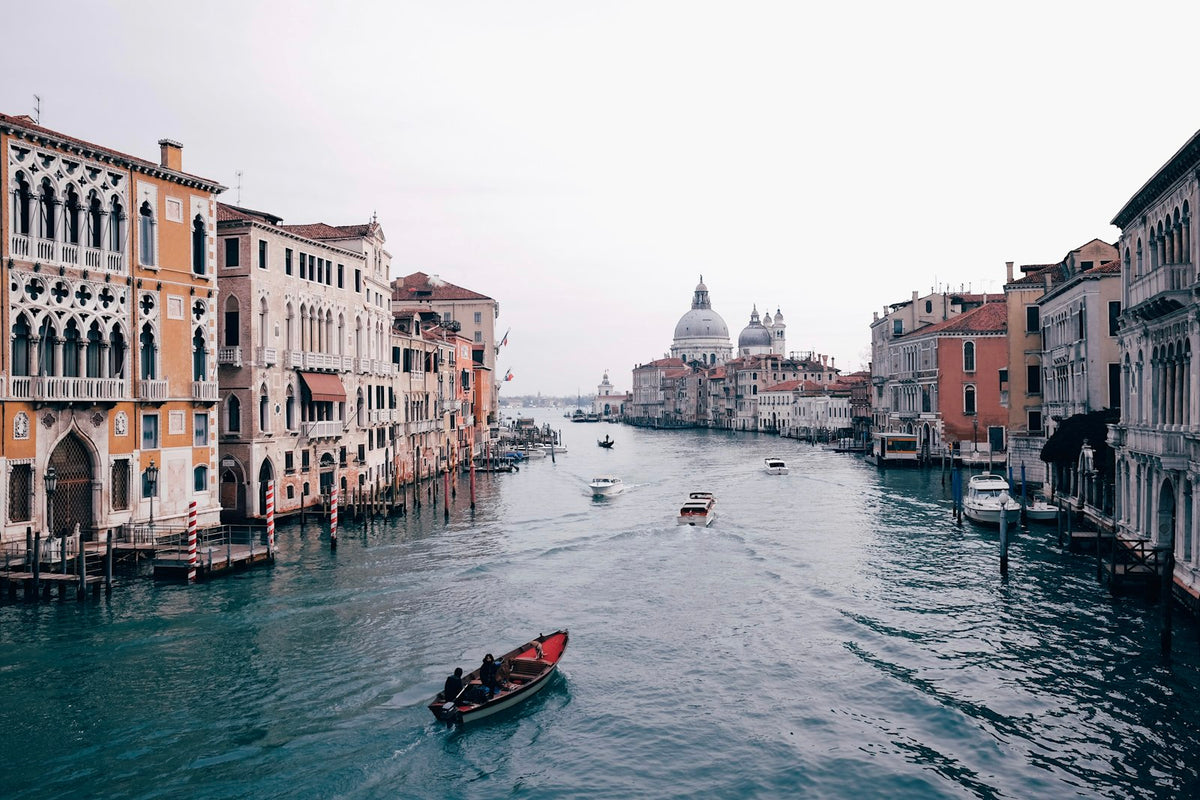
Stucco veneziano is the Italian name for burnished lime plaster: slaked lime putty bound with very finely milled marble, laid in thin coats with a steel trowel and compressed until it takes a sheen. It is the same material that English speakers call Venetian plaster or polished plaster. The Italian phrase means, literally, Venetian stucco, and the confusion that follows in English comes almost entirely from the word stucco meaning something quite different here than it does in Italy.
Venetian plaster is what Zavoré supplies, installs and teaches, and our own team provides Venetian plaster installation across the UK.
We tint and supply it from Birmingham and we lay it ourselves, so this piece is about what the term actually covers, how the material behaves under a trowel, and what you need to buy to do it properly.
In Italian, stucco is a fine paste used for smoothing, filling and finishing, closer to what a British decorator would call a filler or a fine finishing plaster. It is a family of materials, not one product. Veneziano places it: the technique was refined in Venice, where lime and marble dust made a wall that could look like polished stone without the weight of stone, which mattered a great deal on a city built on timber piles.
So stucco veneziano describes a method as much as a mix. Very thin coats. A tight, flexible steel blade. Compression rather than build up. The depth comes from light passing into a translucent lime surface and bouncing back off the marble in it, which is why the finish looks like it has something behind it and paint never does.
Two related Italian terms turn up in the same breath. Grassello di calce is the lime putty itself, matured under water, and is sometimes used as a name for the finished polished plaster too. We have written about it specifically in grassello in bathrooms. Marmorino comes from marmo, marble, and describes a coarser mix that finishes matt or softly satin rather than glossy.
In British and American English, stucco usually means an external cement render: the grey, sand and cement coating on the outside of a house. That material has nothing to do with the Italian usage. It is thicker, cement bound, applied by the bucket rather than the blade, and it is never burnished.
Which is why a search for stucco brings back rendering companies and a search for stucco veneziano brings back interior finishes. If you want the two set side by side properly, our article on stucco vs Venetian plaster does exactly that.
A short glossary, since these come up constantly:
| Term | What it actually refers to |
|---|---|
| Stucco (English usage) | External cement render |
| Stucco (Italian usage) | A fine finishing paste or plaster, as a family |
| Stucco veneziano | Polished lime and marble plaster, burnished to a sheen |
| Grassello di calce | Matured lime putty; also used for the polished finish made from it |
| Marmorino | Coarser lime and marble plaster, matt to satin |
| Intonachino | Thin textured lime plaster with graded aggregate |
| Travertino | Lime plaster worked to imitate travertine stone |
A true stucco veneziano has two essential ingredients and very little else. Lime putty is the binder, and it sets by taking carbon dioxide back out of the air, which is a slow chemical change rather than simple drying. Marble powder, milled to a flour, is the filler, and it is what allows the surface to be compressed to a polish instead of bruising.
Modern tubs may carry additives for workability and open time, and some products sold under the same name are acrylic bound rather than lime bound. They are not the same thing and they do not age the same way. We set the two against each other in lime vs acrylic Venetian plaster, and we are clear about which of ours is which.
The sequence is straightforward to describe and difficult to do.
The background. Flat, sound, dry and primed. A polished finish is reflective, so any undulation in the wall behind it becomes a visible ripple. Nothing in two thin coats will hide a bad wall.
The first coat. Laid tight and thin, more filling the surface than building it, and left to firm.
The following coats. Applied thinner still, in short overlapping passes that are deliberately not aligned with each other. This is where the movement in the finish is created or lost. Consistent, repeating strokes read as a pattern; varied, closed strokes read as stone.
Burnishing. Once the surface is firm but not fully hard, it is compressed with the flat of a clean blade. The sheen is entirely a product of compression. Nothing is added to make it shine.
Protection. Wax or a sealer, chosen for the room. Wax deepens the colour and lifts the gloss; a sealer is the more practical answer where water and cleaning are involved. Our wax guide covers the choice.
Lime firms in hours and keeps hardening for weeks, so the wall is touchable long before it is finished curing. That is normal and it is why waxing and heavy use both come later.
Our Veneziano plaster (£200 for 24kg) is the straight lime and marble material, and Veneziano Metallico (£175 for 20kg) is the same finish with a metallic shimmer in it. Both are tinted to your colour in the tub before they leave us, so the colour sits in the body of the material rather than on top of it.
You will also want primer (£10) for the background and protection for the finished wall, natural beeswax (£68) for a domestic feature wall, or sealer (£25) where it will get wet or wiped. Quantities depend on the number of coats and how heavily the material is laid, so use the coverage guide rather than guessing.
UK delivery is tracked and priced at checkout by weight. International orders are quoted individually: email sales@zavore.co.uk with what you need and where it is going, before you order. The full range is in the shop, and the commercial side of the finish is on the polished plaster page.
In practice, yes. Polished plaster is the English trade name for the same lime and marble finish burnished to a sheen. The only caveat is that polished plaster is sometimes used loosely to cover acrylic bound products too, whereas stucco veneziano implies a lime material. If it matters to you, ask what the binder is.
Honestly, it is the hardest finish in the range to do well, because the burnish and the stroke pattern are unforgiving and mistakes cannot be sanded out. People do learn it. Our three day beginner course in Birmingham is £750 and covers polished plaster from bucket to burnish; the four day advanced course is £1,200 and goes into vein work, high gloss and blending.
Yes, on walls, with the right protection and sensible detailing. Lime is naturally alkaline and copes well with humidity, but it is not a waterproofing system on its own, and a sealed shower enclosure is a different conversation from a splash free wall. Tell us the room before you order and we will tell you what to protect it with.
Because the material and the method are Italian, and because the English alternatives are vague. Stucco means render here, plaster means skim, and neither tells you the wall is lime, marble and burnished. The Italian term is precise, which is exactly why the trade kept it.
Where to go next: if you are buying, the Veneziano tub tinted to your colour and a sample board first is the sensible order. If you are learning, start with what is Venetian plaster and then the Academy. If you would rather we laid it, the number is 07592 929191.
Guidance for homeowners who want to limewash their own cottage or old home, and how to ask Zavoré about limewash training.
Artificial RockA guide to plaster finishes for Surrey pool rooms, home spas and garden rooms, covering tadelakt and microcement in humid spaces, artific...
Holiday LetsWhich plaster finishes suit holiday lets in coastal Kent and Sussex towns, with tadelakt and microcement for bathrooms, limewash for bedr...
Brighton and HoveA guide to lime plaster and Marmorino in Brighton and Hove Regency homes, covering tall rooms, cornice, sea air and why listed building c...
BuckinghamshireHow to choose finishes for a barn conversion in Buckinghamshire or Hertfordshire, from lime plaster that copes with timber frame movement...
Abu DhabiHow to order Venetian plaster for sites in Al Dhafra, from samples and quantities to tracked delivery, import duty or tax, receiving and ...

Providing luxury finishes for the most prestigious addresses in the world
Venetian plaster, limewash, microcement, tadelakt, metallics, sculptural plaster and gold leaf, supplied and installed by our own team, with Venetian plaster taught at our Birmingham studio.
One list, run by the people who make the material. No noise, and nothing we would not want to read ourselves.
We email as the house has something worth saying, never daily. Unsubscribe from any email, or reply STOP to any text. We never pass your details to anyone.