

✦
Where Artistry Begins
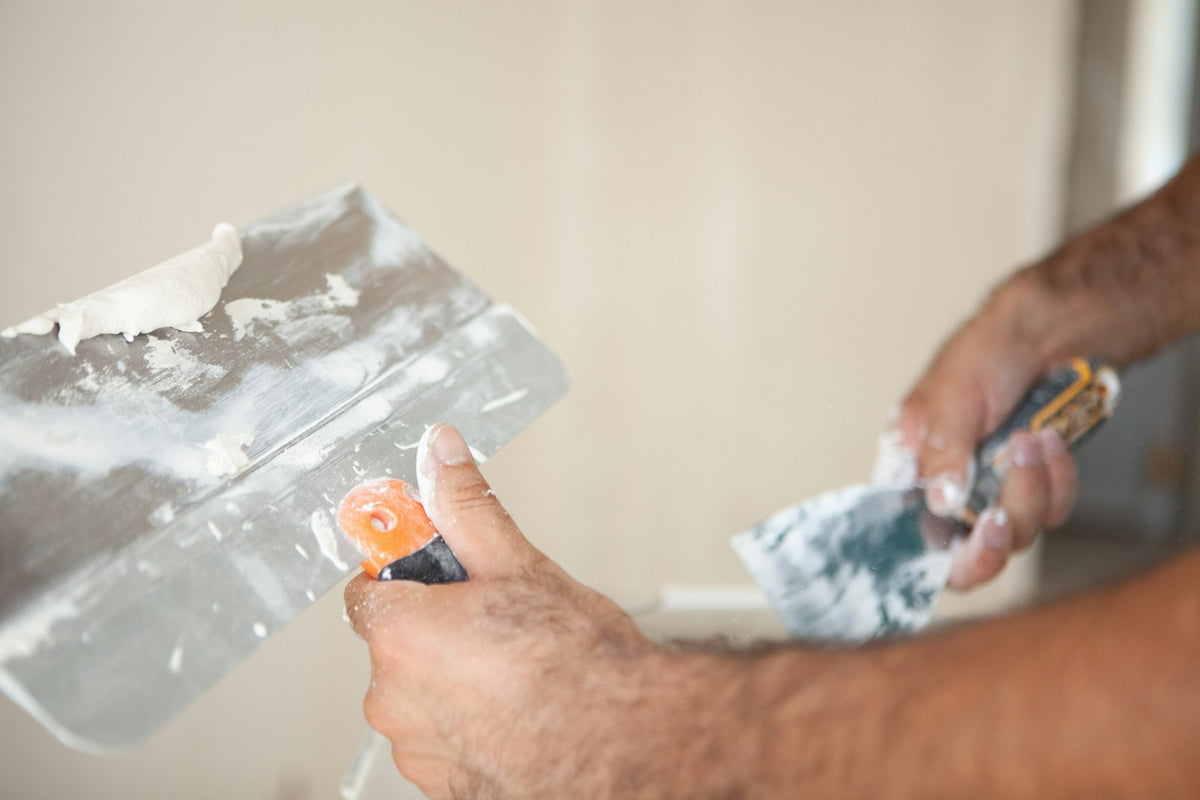
Venetian plastering is not hard to start, but it is a craft that rewards practice. The basic trowel movements can be learned on a course, while control, consistency and speed come from repeating them on real surfaces.
That is the honest answer, and it is good news. You do not need a particular background to begin, and the parts that feel difficult at first are the same parts that in person tuition and practice panels are designed to help with. This guide shows where the difficulty really sits, so you can judge it for yourself before you book anything.
It is different rather than simply harder. Venetian plaster is built from thin coats worked with a trowel, so it asks for a lighter touch and more patience than rolling paint, and more attention to the finished surface than a flat skim.
Some parts are quick to pick up and others take longer. The table shows how that usually looks.
| Skill | Early on | With practice |
|---|---|---|
| Holding and loading the trowel | Quick to learn | Becomes second nature |
| Spreading thin, even coats | Feels awkward at first | Smoother and more consistent |
| Timing between coats | Needs guidance | Judged by feel |
| Burnishing | Easy to start, easy to overdo | Pressure becomes controlled |
| Keeping colour and sheen even across a wall | The hardest part for most people | Improves with repetition |
A handful of things catch most people out, and none of them is a talent you either have or lack. They are habits of the hand and the eye, and habits can be built.
Drying and curing also vary with the product and the room, which is why the theory of how the materials behave matters as much as the trowel work. For more on that, see our guide to drying and curing.
Being shown in person, using proper materials and practising on panels before you touch a wall make the biggest difference. Each one removes a source of guesswork.
The 3 day Beginner Course at the Zavoré Academy in Birmingham is built for people who have never used Venetian plaster. It runs from 10am to 5pm, costs £750 per person and needs no experience.
It starts with theory, covering what Venetian plaster is, how the materials behave and how a wall is built up layer by layer. You then work through surface preparation and base coats, a wide range of textures, the systems that decide how many coats each product needs, and the finishes Marmorino, polished plaster and metallics from bucket to burnish. Everything is taught by working applicators who install these walls for clients, with all materials and tools provided. You can book the Beginner Course online, and a closer look at the teaching is in inside the Beginner Course.
If you already know which part worries you, say burnishing or colour work, the 1 to 1 training is shaped entirely around what you want to practise. For a plain explanation of the syllabus, read Venetian plastering training for beginners, and for planning your time, see how long Venetian plastering training takes.
Keep practising on boards and small areas, because a course gives you the foundation and repetition gives you the speed. There is no fixed timetable, and it depends on how often you practise.
The Beginner Course runs for 3 days, from 10am to 5pm, and gives you the foundations. How quickly you become fast and consistent depends on how much you practise afterwards, so there is no fixed timescale.
It is different. It uses a trowel and thin layers instead of a brush or roller, so it asks for more patience and a lighter touch, but the movements can be taught and practised.
Most people find timing between coats and keeping pressure even the hardest parts. Colour and sheen that stay even across a whole wall take the longest to master.
You can try, but without someone to watch your technique it is easy to repeat a mistake without knowing why. Zavoré teaches in person only, so you can be corrected as you work.
You need patience and a willingness to practise more than natural talent. The Beginner Course assumes no experience, and tuition is aimed at building the habits you need.
If you would like to try it with a tutor beside you, call 07592 929191 or email sales@zavore.co.uk. You can also see the course dates and register interest on the training page. A bench can be held with half the price and the rest paid on the day, and course dates are confirmed by email within 24 hours of booking.
How painting companies in Dubai can order Lime Paint for villa repaint work, with colours tinted room by room, labelled tubs and tracked ...
ContractorsHow plastering contractors can add microcement, tadelakt, limewash and Venetian plaster through Zavoré 1 to 1 Training, group courses of ...
Abu DhabiIf you searched for Venetian plaster paint for a villa in the UAE, here is what we actually supply, which real plaster to order instead a...
CoursesWhat three days on the Zavoré tadelakt course involve, from the base and radiused corners to the burnishing window, the stone, the soap a...
CoursesAn honest look at general plastering courses against the Zavoré Beginner Course in Venetian plaster at our Manchester centre, who each su...
Abu DhabiWhere Venetian plaster belongs in an Abu Dhabi villa bathroom, which finish takes over in the wet zone, and how the walls are sealed, sur...

Providing luxury finishes for the most prestigious addresses in the world
Venetian plaster, limewash, microcement, tadelakt, metallics, sculptural plaster and gold leaf, supplied and installed by our own team, with Venetian plaster taught at our Birmingham studio.
One list, run by the people who make the material. No noise, and nothing we would not want to read ourselves.
We email as the house has something worth saying, never daily. Unsubscribe from any email, or reply STOP to any text. We never pass your details to anyone.