

✦
Where Artistry Begins
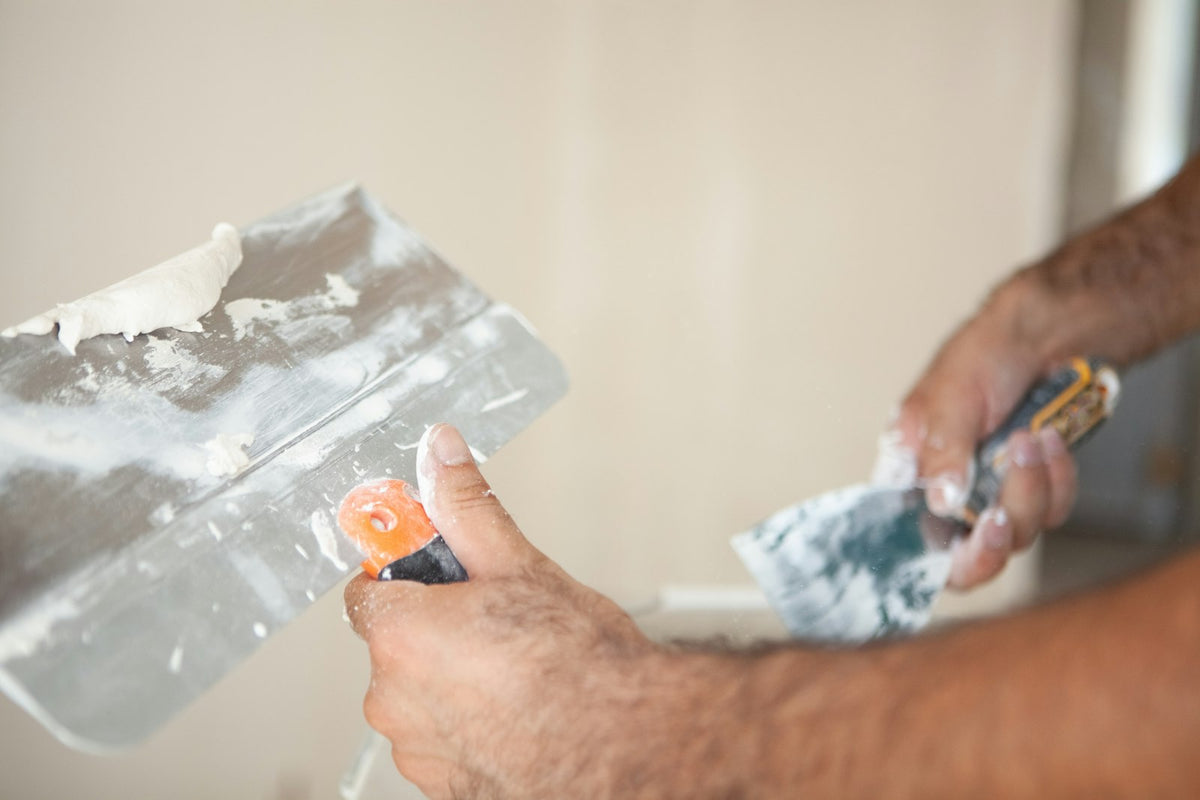
There is no single number of coats for Venetian plaster. A finish is built as a sequence, a prepared and primed wall, then several very thin decorative coats, then polishing and, for some finishes, a wax. How many decorative coats a wall needs depends on the finish, the colour, the depth of movement you want and the wall underneath. Zavoré sets the count for each job when the sample is made and approved.
If you want to understand the material itself first, our Venetian plaster page explains the lime and acrylic types and the looks they give. For homes and businesses anywhere in the country, see Venetian plastering across the UK. This guide stays general on purpose, because the right answer for your wall is decided at the survey and the sample, not in an article.
It helps to think of the wall as a stack, from the bottom up.
When people ask how many coats, they usually mean step four. But a good result depends on every layer, and skipping preparation is the most common reason a finish disappoints.
The look you want drives the build. A soft, even surface with gentle variation can be achieved with fewer decorative coats. A deep marble effect, with clouds of light and dark and real depth under the polish, needs more, because each layer adds to what you see through the one above.
Colour matters too. Strong or dark colours often need more care to reach an even depth, while very pale finishes can show a thin patch more readily if the coats are rushed. The texture of the plaster itself plays a part; finer materials go on thinner and may take more passes.
Finishes also differ in kind. Marmorino can be left matt or burnished to a soft lustre, and it is built differently from a high gloss polished plaster. Travertino uses its own technique to create bands and pores. Limewash, which is a paint rather than a plaster, is applied in washes. Comparing coat counts across these is a little like comparing different recipes.
Each coat needs the one below it to be ready before the next goes on. How long that takes depends on the room, the season, the ventilation and the material, so we do not give timings in an article. What we can say is that rushing is a false economy. A coat laid too soon can drag, cloud or lose its sheen.
That is why installation is planned in blocks of days, so the same artisans stay on the job and lay each coat in order. The person who laid the first decorative coat knows how it behaved and is the right person to judge when the next one can go on.
Both are built in thin layers. Lime Venetian plaster breathes and suits solid masonry, and it is the traditional material. Acrylic plaster forms a film and is often chosen for modern partitions or areas that need a tougher surface. The working method differs between them, and so can the number of passes. Our installation page explains how we choose between them, and the choice is confirmed at the survey.
The sample. Before any wall is started, we make a sample in your chosen finish and colour, built the same way the wall will be. Once you approve it, the wall is laid to match. You can choose from 48 house colours or any NCS reference, and a sample board is a good first step for narrowing down the colour.
The process runs like this. You send photos, drawings and rough measurements. We survey the walls before giving any price. A sample follows for approval, and then dates are agreed. Full details are on our Venetian plaster installation page.
If you want to learn the technique, our courses run in person at the Zavoré Academy in Birmingham and at our London and Manchester centres. The Beginner Course is 3 days, the Advanced Course 4 days, and 1 to 1 Training 3 days, with all materials included. Building up coats by hand, and learning when a layer is ready for the next, is a big part of the training.
It depends on the finish, the colour and the depth you want. Every wall is primed and prepared first, then several thin decorative coats are laid and polished. Your approved sample is built the same way as the wall, so it sets the number for your job.
Not as a decorative coat, but it is an essential layer. The right primer for the background helps the plaster grip and evens out suction, so the decorative coats look consistent across the wall.
Sometimes, but it is far better to agree the depth at the sample stage. Adding coats to a finished, waxed wall is not the same as building them in one sequence, and the result can differ from the original sample.
No. Wax goes on after the plaster is polished. It deepens the colour and adds some protection, but it is a finishing treatment rather than a layer of plaster.
For advice on your own walls, call +44 7592 929191 (Monday to Saturday, 9am to 6pm) or email sales@zavore.co.uk with photos and rough measurements. We will talk you through the finish and what the sample will show.
Why limewash is a useful skill for builders and restoration trades who work on older buildings, and how to ask Zavoré about limewash trai...
LimewashHow limewash fits alongside Venetian plaster in a decorative finishing business, and how to ask Zavoré about limewash training.
InstallationHow to decide between buying Zavoré material supply only for your own decorator and having our applicators supply and install the finish.
AftercareA guide to the first weeks and months after a Zavoré installation, covering drying, gentle cleaning, fixings, small marks and when to get...
CommercialHow commercial decorative plaster installations are planned around opening hours and fit out programmes, and what to agree about site pap...
FlatsWhat to expect if you stay at home or in your flat while Zavoré installs a polished plaster, limewash or microcement finish.

Providing luxury finishes for the most prestigious addresses in the world
Venetian plaster, limewash, microcement, tadelakt, metallics, sculptural plaster and gold leaf, supplied and installed by our own team, with Venetian plaster taught at our Birmingham studio.
One list, run by the people who make the material. No noise, and nothing we would not want to read ourselves.
We email as the house has something worth saying, never daily. Unsubscribe from any email, or reply STOP to any text. We never pass your details to anyone.