

✦
Where Artistry Begins
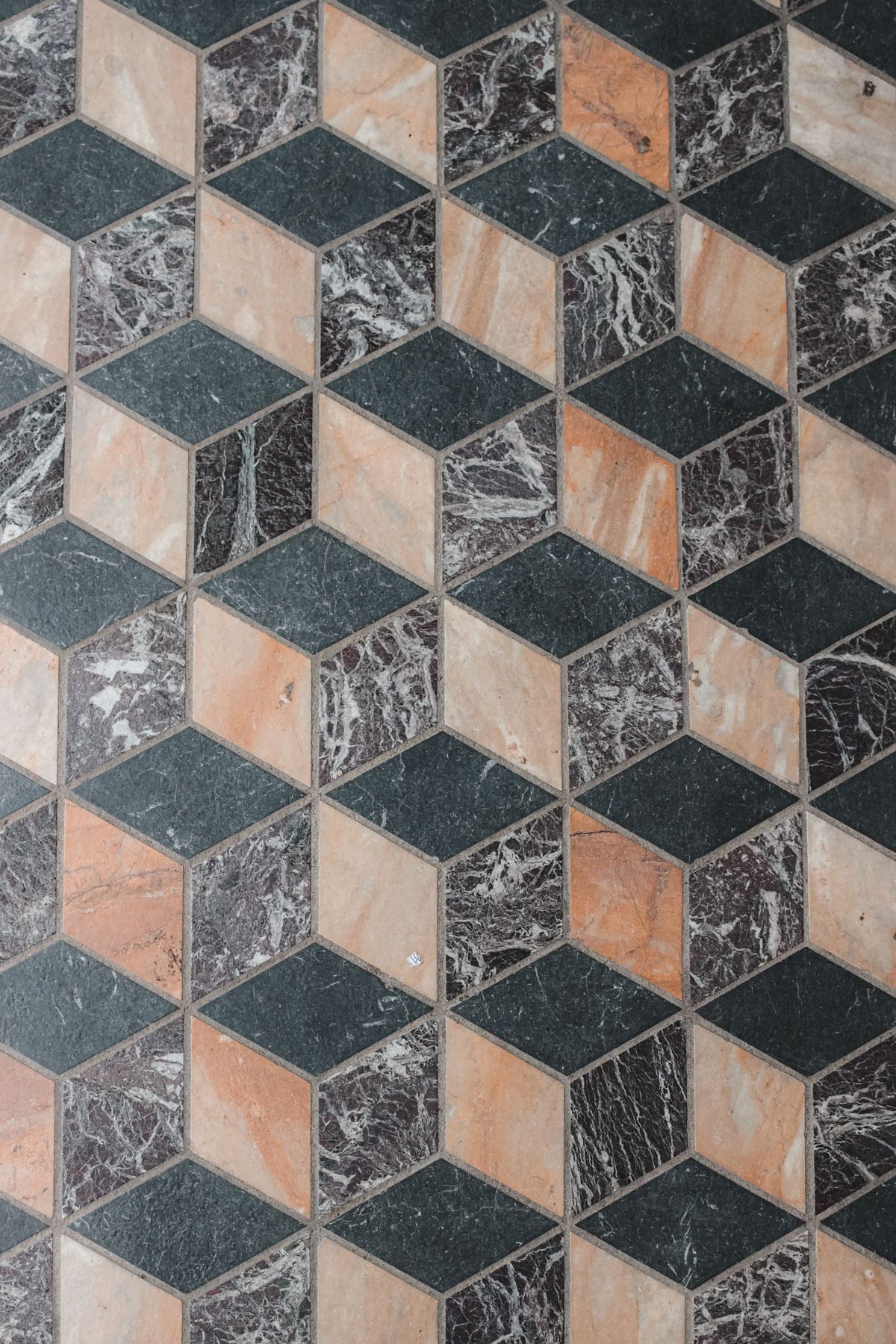
Searching for marble Oman wide usually leads to two very different walls, cut stone cladding fixed to the wall in slabs, or polished plaster that Zavoré lays by hand in thin coats of lime and powdered marble. Both can give a villa hall or majlis the calm depth of stone. This guide sets them side by side so you can choose with open eyes, and we install the plaster anywhere in Oman with our own artisans.
Our page on polished plaster gathers the guides on the finish itself, and polished plaster in Muscat explains how a job is planned in the capital, from Qurum and Al Khuwair to the coastal community of Al Mouj. For the wider picture of lime work across the country, read Venetian plastering in Oman.
Stone cladding is real stone, cut to thickness and fixed on. That brings genuine geology to a room, and nothing replaces it if you want the vein of one particular block. It also brings weight. The wall behind has to carry it, the fixing method has to suit the background, and the slabs meet at joints that stay visible however carefully they are set. Around a doorway or an outside corner, each piece is cut and mitred by hand.
Polished plaster works the other way round. Slaked lime and marble ground to a fine powder go on in several thin, nearly transparent coats, and each coat is burnished with a steel trowel until the wall takes on a soft gleam. The colour sits inside the material, so you see into the wall rather than across it. There is no structure to hang, no grid of joints and very little added load.
The honest answer depends on the room. A floor that will take heavy feet every day is a job for stone. A long reception wall, a stair wall that curves up through two storeys or a set of columns in an entrance hall is where plaster comes into its own, because one continuous surface reads calmer than a patchwork of slabs.
Think about how the wall meets everything around it, too. Light switches, sockets, door frames and skirting all need cutting round. With slabs every cut is a visible edge. With plaster the trowel simply runs up to the frame and stops.
If your home has arches and niches, these are the shapes where plaster earns its place. The trowel follows a curve without seams, so an arched opening or a round column carries the finish all the way round. Cladding a column in stone means either curved pieces cut specially or flat strips with joints running up the height.
If you like the open, pitted texture of travertine rather than a smooth polish, look at travertino. It is a plaster that imitates the banded stone, with the pits formed while the material is still wet and the trowel passes kept horizontal so the bands run true. It also wraps round arches and columns, with no fixings or substructure. It is plaster, not stone.
A chip in a stone slab is hard to hide. Matching the stone is not always possible, so a bad knock can mean lifting and replacing a whole piece. A knock in polished plaster can usually be filled with the same tinted material, burnished and waxed so it settles into the surface. Keeping a little of the original batch helps.
Lime breathes, which suits solid masonry walls. It is still not for inside a shower or a steam room, where tadelakt on a waterproofed wall is the right answer, and it should not sit directly behind a hob. The general truth about polished finishes applies here as well. They show every dip, so a wavy wall is skimmed flat before the first coat.
There are 48 house colours, or you can name any NCS reference. Warm earthy tones, ivory, sand and pale grey all sit comfortably in rooms built in cream and white. A sample board in the chosen colour and sheen comes first, so you can hold it beside your floor and joinery at different hours before anything is ordered for the walls.
We talk through the building, the climate and how the room is used at the survey. Rooms here are air conditioned, and that is part of the conversation. Most communities, towers, malls and hotels have rules on working hours and deliveries, so check with yours, and if you rent, ask your landlord first.
If you already have an applicator, plaster materials can be sent from the UK instead. They are tinted to your approved sample and go on a tracked service, delivery is quoted individually, and any import duty or tax is set by Oman and paid by the buyer.
No. It contains marble ground to a powder, bound with lime, so it is mineral all the way through and has a stone like depth. It is still a plaster laid in thin coats, not a cut block of marble, and we describe it that way in every conversation and every quote.
Yes, by a wide margin. A few thin coats of lime add very little to the wall, whereas slabs need fixings and a background strong enough to hold them. That difference often matters on upper floors, on partitions and around curved shapes.
Often it can, once the wall is sound and flat. Plasterboard joints need reinforcing and the right primer first. We look at the background at the survey and tell you plainly what preparation it needs before any coat goes on.
Plaster, in most cases. Small damage is filled with the same tinted material and burnished back in. A cracked or chipped slab usually has to be cut out and replaced, and a perfect stone match is not always available.
To compare the two for your own rooms, ring +44 7592 929191, Monday to Saturday from 9am to 6pm UK time, or send photos, rough measurements and the location to sales@zavore.co.uk. We will tell you which finish suits each wall.
A guide to finishing the tall walls of a converted barn in Worcestershire with clay plaster or Marmorino, including oak beams, new insula...
Black CountryHow concrete effect plaster brings an industrial look to homes in Wolverhampton and the Black Country, without the weight of real concrete.
LimewashA practical starter kit of tools for limewash work, what each one does, and how to ask Zavoré about limewash training.
KentA practical guide to mixing several plaster finishes in one Kent house, matching each to the room, keeping a colour thread through the ho...
BedroomsWhy clay plaster suits bedrooms in Oxfordshire homes, from stone cottages to modern houses, and how this breathable matt finish is applie...
TrainingWhy blending is taught on the Zavoré advanced course, the jobs where repairs and joins matter and how to arrive ready to get the most fro...

Providing luxury finishes for the most prestigious addresses in the world
Venetian plaster, limewash, microcement, tadelakt, metallics, sculptural plaster and gold leaf, supplied and installed by our own team, with Venetian plaster taught at our Birmingham studio.
One list, run by the people who make the material. No noise, and nothing we would not want to read ourselves.
We email as the house has something worth saying, never daily. Unsubscribe from any email, or reply STOP to any text. We never pass your details to anyone.