

✦
Where Artistry Begins
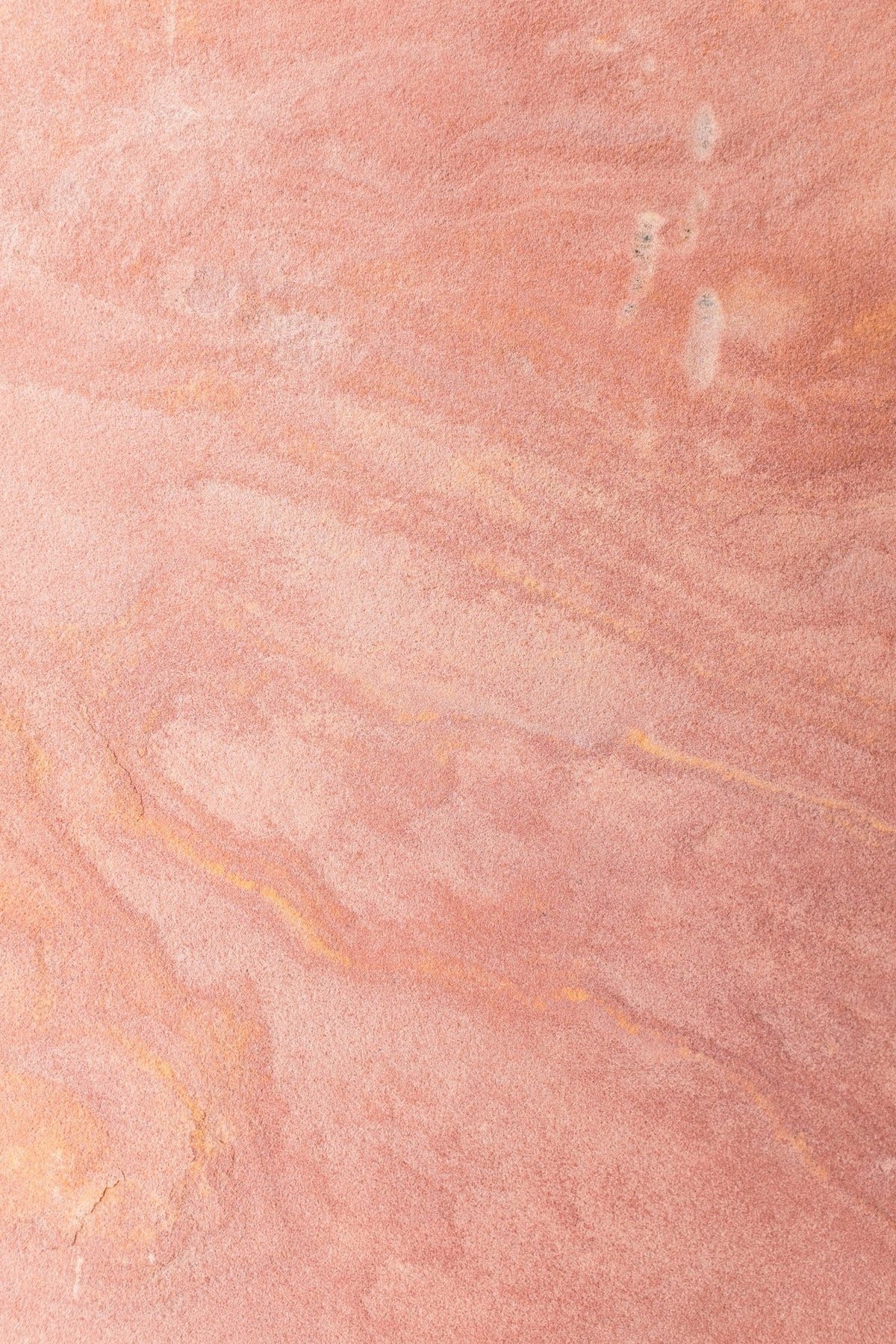
Travertino plaster and marmorino are both lime finishes made with marble aggregate, and people mix them up constantly. The short answer: marmorino is a fine, closed stone surface that burnishes to a soft sheen, while travertino is laid to leave open pitting and horizontal movement so the wall reads as cut travertine stone. Same binder, different grain, different technique, different rooms. This is how to tell them apart and where each one belongs.
Zavoré lays this for you too. Our own team provides Venetian plaster installation across the UK.
Marmorino imitates nothing in particular. It is a lime and marble dust plaster that gives you the character of stone in the abstract: a soft, dense, slightly cloudy surface with depth in it, laid flat and burnished back so light moves across it. Take it further and it approaches a polish; leave it earlier and it stays matt and stony. Our marmorino page shows the range.
Travertino is imitating a specific stone. Real travertine is a limestone laid down by mineral springs, full of small voids and running in horizontal beds. The plaster reproduces that: an open, pitted, slightly rough surface with directional movement through it, so a wall looks like it was sawn from a block. Our travertino page shows it on a wall.
That difference of intent explains everything below. One is a beautiful lime surface. The other is a portrait of a stone.
| Marmorino | Travertino | |
|---|---|---|
| Binder | Slaked lime | Slaked lime |
| Aggregate | Marble, graded fine to medium | Coarser, with material that opens the surface |
| Surface | Closed, dense, even | Open, pitted, with visible voids |
| Movement | Cloudy, non directional | Horizontal, bedded, directional |
| Burnishes to | Matt through to a soft satin sheen | Very little; the pitting stays open by design |
| Feel by hand | Smooth and cool | Textured, you can feel the holes |
| Reads as | Stone in general, or plaster at its best | Travertine specifically |
| Light | Reflects and glows | Catches shadow in the pits |
| Cleaning | Wipes down easily | Holds dust in the texture |
| Best at | Whole rooms, large flat walls | Feature walls, columns, fireplaces, reception areas |
Everything comes down to what is in the tub. Marmorino carries marble graded fine enough for the trowel to close the surface. Pass over it while it is at the right stage and the particles compress into each other, the face tightens, and you get a dense skin that will take a sheen. The finer the grade, the further it will go towards polish.
Travertino carries a coarser, more open aggregate, and the technique deliberately leaves the face unclosed. You lay it, you work it in horizontal strokes to set the bedding, and you leave voids in the surface rather than filling them. Burnishing it hard would defeat the whole idea. What you can do is knock back the high points so the wall has a sawn, honed quality with the pits still reading.
This is also why travertino is more forgiving to lay and marmorino is less so. On a pitted surface, a slight irregularity is part of the material. On a closed, burnished marmorino, every stroke shows, which is why it is taught seriously on the Academy courses rather than picked up in an afternoon.
Both are lime, so both breathe, both suit period buildings, and both can go in a bathroom on walls away from direct water with the right protection. Neither belongs inside a shower enclosure without the proper build up.
The same tint will not look the same on the two finishes. A burnished marmorino deepens the colour: compression darkens and enriches the shade, and the sheen adds another layer to it. A pale grey can end up looking like polished limestone. Travertino does the opposite. The open texture and the shadow in the pits lighten and break up the colour, so a tint reads softer and dustier than the sample suggests.
In practice that means picking the finish first and the colour second, and seeing the shade in the actual material. Travertino leans naturally towards stone colours: creams, sands, greys, bone. Marmorino goes anywhere, including into deep and cool shades that would look odd on a pitted surface. Choosing a colour covers how to test a shade properly, and our marmorino guide goes further into that finish on its own.
Travertino is £200 for 24kg, tinted to your colour in the tub and sent on tracked delivery. The rest of the lime range, including the marmorino family, is in the shop, and everything is tinted to order rather than sold as a white base for you to mix. A sample board in your colour is £8, which is the only sensible way to compare a pitted and a burnished surface in the same shade.
They are cousins rather than parent and child. Both are lime plasters with marble aggregate, made by the same houses and laid by the same trade. Marmorino is graded and worked to close the surface and take a sheen. Travertino is graded and worked to leave it open, so the wall reads as travertine stone.
Only a little, and doing it properly means knocking back the high points rather than burnishing the whole face. Fill and polish the pits and you have lost the reason to use travertino at all. If you want depth and sheen, use a marmorino or a polished plaster and get it honestly.
Marmorino, in normal use. Both are cured lime and genuinely hard, but a closed, burnished surface sheds dirt and wipes clean, while an open texture holds dust and shows finger marks sooner. In a hallway or a kitchen that difference matters more than the hardness of the material itself.
It varies by wall and by room rather than by material, so we quote rather than guess. As a rule, a high burnish marmorino takes more passes and more skill than a travertino of the same area, while travertino is more likely to be specified on one feature wall than across a whole room.
Where to go next: look at the travertino and marmorino pages together, decide whether you want texture you can feel or depth you can see, and order a sample board in your colour before you commit a whole wall to either.
The protective equipment and habits that keep you safe when working with limewash and lime, and how to ask Zavoré about limewash training.
Buying GuideA step by step guide for Kent homeowners who want to buy authentic Italian Venetian plaster for their own decorator to apply, from sample...
BerkshireWhat housebuilders and developers in Surrey and Berkshire should plan when specifying Venetian plaster for show homes and new homes, from...
BerkshireHow decorative plasterwork and gilding are repaired in listed country houses in Berkshire and Oxfordshire, from recording and consent to ...
HertfordshireHow mosaics can be used in Hertfordshire bathrooms and kitchens, with a nod to the Roman mosaics of Verulamium at St Albans, and practica...
SupplyZavoré sells Bee's Wax Natural, Bee's Wax Paste and Bee's Wax Metallica in Gold and Silver for polished plaster. Here is which one to ord...

Providing luxury finishes for the most prestigious addresses in the world
Venetian plaster, limewash, microcement, tadelakt, metallics, sculptural plaster and gold leaf, supplied and installed by our own team, with Venetian plaster taught at our Birmingham studio.
One list, run by the people who make the material. No noise, and nothing we would not want to read ourselves.
We email as the house has something worth saying, never daily. Unsubscribe from any email, or reply STOP to any text. We never pass your details to anyone.