

✦
Where Artistry Begins
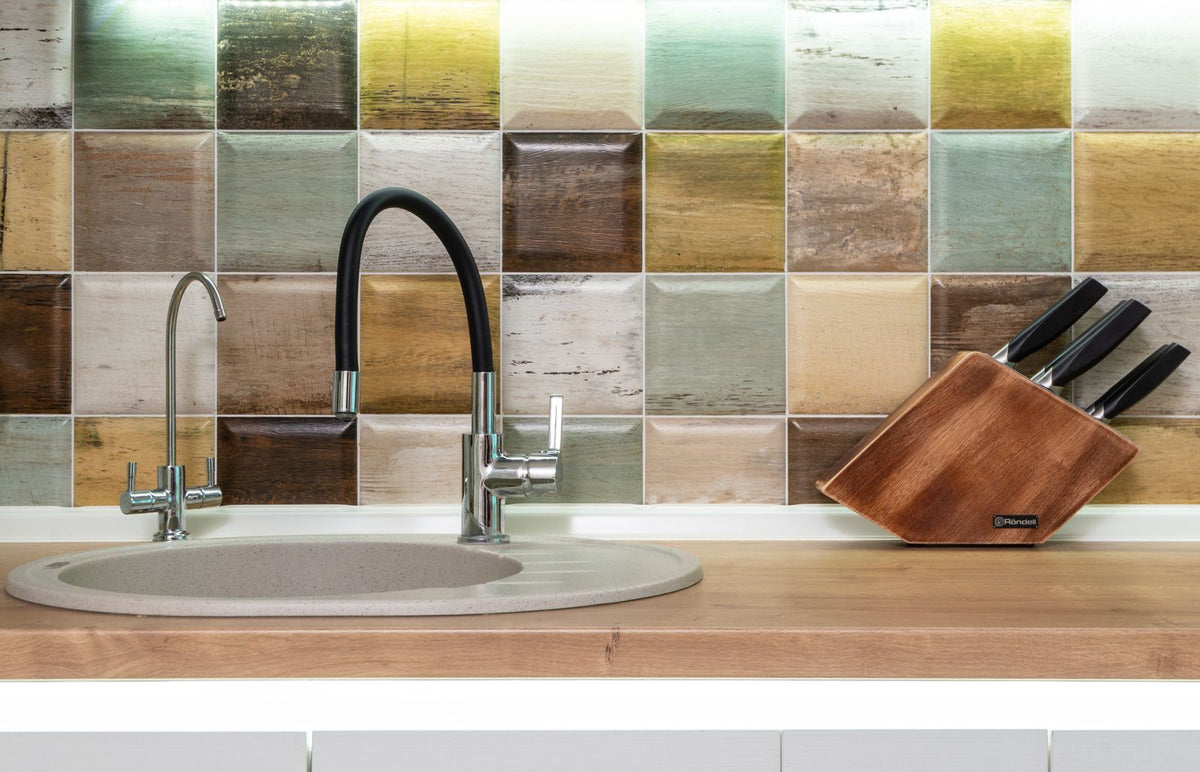
Yes, polished plaster can look beautiful in a kitchen, on the walls, around a chimney style extractor hood and on a feature wall by the dining table. Zavoré installs polished plaster in kitchens across the UK with our own artisans, finishing it with a natural wax so everyday marks wipe away more easily. The one place to be careful is directly behind the hob and sink, where heat, grease and constant splashing ask more of a lime finish than it should give.
Our page on polished plaster explains the finish itself, and Venetian plastering across the UK shows where we install it. For how a kitchen job runs, see our Venetian plaster installation page.
Kitchens have become living rooms, and a plain painted wall can feel cold next to stone worktops and timber cabinets. Polished plaster brings depth and a soft sheen that changes through the day. The walls that suit it are the ones you see from the table or the sofa, rather than the ones that take splashes.
This is the question we are asked most, and the honest answer is to be careful. Directly behind the hob, heat and spitting fat land on the wall every day. Directly behind the sink, water sits on the surface. A waxed lime finish resists ordinary marks, but it is still a lime plaster, and in those two zones a pane of glass, a slab of stone or a run of tiles is the safer choice. Many owners take the polished plaster right up to the edge of a glass or stone splashback, so the two read as one design.
If you want a seamless, plaster like surface in a wetter zone, microcement is a finish we install, and its sealer makes it washable. Like every finish near water, it needs a properly prepared wall.
Polished plaster is laid in thin coats with a flexible steel trowel, burnished, and then protected with a natural wax buffed in by hand. In a kitchen the wax matters more than anywhere else in the house, because it helps the surface shrug off light splashes and finger marks. Wipe spills promptly with a soft, damp cloth and avoid harsh cleaners or scouring pads, which can dull the sheen. Over the years the wax can be refreshed, and small marks in a lime finish can usually be repaired locally.
Lime breathes, and that suits a room where steam rises every day, provided the kitchen has good extraction. Acrylic products form a film instead, which behaves differently, so ask which material is being proposed.
A plastered box or chimney around an extractor hood is one of the most striking uses of polished plaster in a kitchen. It sits above the cooking zone rather than right against it, so it is a reasonable place for the finish, as long as the hood is working well and any heat from the cooking zone is kept away from the plaster by the hood itself and by the splashback below. The hood surround is usually built in plasterboard, so the joints and corners are reinforced and primed first, and the edges are kept crisp.
Plaster usually goes on once cabinets and worktops are fitted and protected, or before, depending on the build. We plan the order with your kitchen fitter at the survey. Lime is caustic while wet, so worktops, floors and appliances are covered throughout.
On walls away from the hob and sink, yes. A waxed polished plaster handles daily life well, and marks can usually be wiped or repaired locally. The parts that take constant heat or water are better in glass, stone or tile.
We do not recommend it. Heat and grease land on that wall every day. Use glass, stone or tile as the splashback and take the polished plaster up to its edge, so the design still feels continuous.
Pale stone, warm white and soft grey sit well beside most worktops, while a deeper tone suits a dining wall. Choose from 48 house colours or an NCS reference, and test a sample board beside your worktop in the room.
Yes. Plaster materials are sold in our shop, tinted to your approved sample. Our courses at Birmingham, London and Manchester teach the finish in person.
To plan polished plaster in your kitchen, call +44 7592 929191 (Monday to Saturday, 9am to 6pm) or email sales@zavore.co.uk with photos, the kitchen layout, rough measurements and the address.
How to order Venetian plaster for sites in Al Dhafra, from samples and quantities to tracked delivery, import duty or tax, receiving and ...
DubaiWhy limewash is a soft, cloudy alternative to decorative paint for Dubai villa bedrooms, with preparation, colours, installation steps an...
CommercialHow fit out companies in Dubai can subcontract the Venetian plaster package to Zavoré, from drawings and sample approval to programme slo...
Abu DhabiHow designers and students focused on majlis design can learn Marmorino, Polished Plaster and Metallics on in person courses in London, B...
CommercialHow fit out companies in Dubai can train a site supervisor on three days of 1 to 1 Training in London, so plaster work is judged correctl...
Buying GuideA plain guide to ordering a Venetian plaster marble effect, covering the base plaster, vein colours, aggregates, primer, wax, quantities ...

Providing luxury finishes for the most prestigious addresses in the world
Venetian plaster, limewash, microcement, tadelakt, metallics, sculptural plaster and gold leaf, supplied and installed by our own team, with Venetian plaster taught at our Birmingham studio.
One list, run by the people who make the material. No noise, and nothing we would not want to read ourselves.
We email as the house has something worth saying, never daily. Unsubscribe from any email, or reply STOP to any text. We never pass your details to anyone.