

✦
Where Artistry Begins
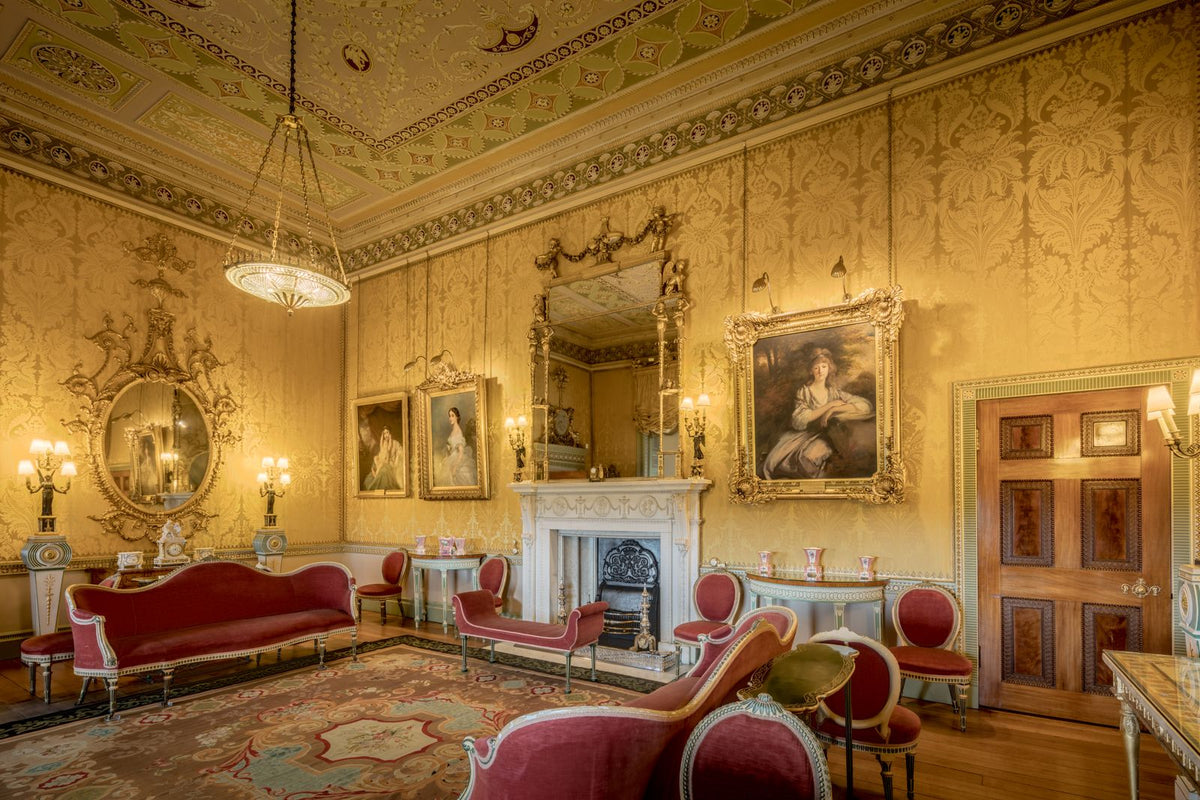
A dado rail is the horizontal moulding that runs around a wall at roughly chair back height, and a picture rail is the moulding that runs higher up, near the ceiling, so pictures can hang from it on hooks and cords. The dado rail began as protection for the wall, the picture rail as a way to hang art without fixing into the plaster. There is no single correct height for either. The best guide is any original evidence in your house, then the proportions of the room.
Zavoré lays this for you too. Our own team provides cornice and coving installation across the UK.
This guide covers what each rail was for, where they usually sit, how they appear in Georgian, Victorian and Edwardian houses, and how to style and paint them today. If you are restoring a period room, our plaster cornice and coving page explains the plaster mouldings we fit, restore and match.

The word dado comes from classical architecture. Britannica defines it as the plain part of a column's pedestal, between its base and cornice, and in later interiors as the panelled, painted or decorated lower part of a wall. Country Life describes how Georgian panelled rooms follow the classical column, with the dado rail as the plinth, the panels above as the shaft and the cornice as the capital.
The rail also had a practical job. The Victorian Society explains that the dado rail originally protected expensive wall hangings from the backs of chairs, and that the point where a chair back brushes the wall determines its height. Designing Buildings adds that chairs in Georgian dining rooms were kept against the walls when not in use. You will sometimes see the same moulding called a chair rail for that reason.
Fashion moved on. According to Designing Buildings, the dado rail was less used for a time in the Victorian period, then grew popular again towards the end of it as a decorative device, often with panelling below, and most Edwardian entrance halls had one.
A picture rail is a moulding fixed high on the wall, shaped so that metal hooks can sit over its top edge. Pictures hang from those hooks on cords, wires or chains. Designing Buildings describes the main benefit simply, you can move and change pictures without damaging the wall.
Picture rails are most closely linked with Victorian and Edwardian houses. Designing Buildings notes that in the Victorian period they were often set at around the height of the tall door architraves, and that Edwardian rooms often had a decorative frieze between the picture rail and the cornice, frequently painted in a contrasting colour. Traditionally they were timber or moulded plaster, usually painted.

We would be wary of any guide that gives one exact height. Original rails were set by the room, the furniture and the fashion of the day. These are the most reliable pointers we have found.
In a Georgian house, the dado rail is part of an ordered scheme, so it is worth keeping it in proportion with the cornice and skirting rather than treating it as a decorating trick. In a Victorian or Edwardian house, rails often survive in the hall, the stairs and the main rooms, and their profiles are frequently shared with neighbouring houses of the same age. If a rail has been lost, a neighbour's surviving run is often the best guide to what belongs.
If your house is listed, check with your local authority before removing or changing original mouldings. For the cornice that often sits above a picture rail, our guide to Victorian, Georgian and Edwardian coving explains how to read the period.

Many people paint rails in a slightly harder wearing finish than the walls, so they can be wiped, while the walls stay flat and soft. Check the paint maker's guidance on which finish suits which surface. For a softer look, the wall above the rail can be finished in limewash or Venetian plaster, with the rail painted to pick out one of its tones. In a richly decorated room, picking out mouldings in gold leaf reads beautifully in lamplight.
Yes, in everyday use the two names describe the same moulding, a rail at around chair back height, named for the job it did.
Yes. Both were in use in Victorian and Edwardian houses and they sit comfortably together. Keep the profiles in the same family so the room reads as one scheme.
That depends on how well the rail is fixed and what it is made of. For a heavy mirror or large framed piece, fix directly into the wall instead.
Yes, including rails you have bought yourself. We also fit, restore and match plaster mouldings, including cornice, coving, ceiling roses, panel mouldings and corbels, and we make new lengths to match an existing plaster profile. Send us photos of what you have and we will tell you what we can do.
Where to go next. See the plaster mouldings we fit, restore and match on our plaster cornice and coving page, or send photos of your room and any surviving mouldings through our contact page.
Why limewash is a useful skill for builders and restoration trades who work on older buildings, and how to ask Zavoré about limewash trai...
LimewashHow limewash fits alongside Venetian plaster in a decorative finishing business, and how to ask Zavoré about limewash training.
InstallationHow to decide between buying Zavoré material supply only for your own decorator and having our applicators supply and install the finish.
AftercareA guide to the first weeks and months after a Zavoré installation, covering drying, gentle cleaning, fixings, small marks and when to get...
CommercialHow commercial decorative plaster installations are planned around opening hours and fit out programmes, and what to agree about site pap...
FlatsWhat to expect if you stay at home or in your flat while Zavoré installs a polished plaster, limewash or microcement finish.

Providing luxury finishes for the most prestigious addresses in the world
Venetian plaster, limewash, microcement, tadelakt, metallics, sculptural plaster and gold leaf, supplied and installed by our own team, with Venetian plaster taught at our Birmingham studio.
One list, run by the people who make the material. No noise, and nothing we would not want to read ourselves.
We email as the house has something worth saying, never daily. Unsubscribe from any email, or reply STOP to any text. We never pass your details to anyone.