

✦
Where Artistry Begins
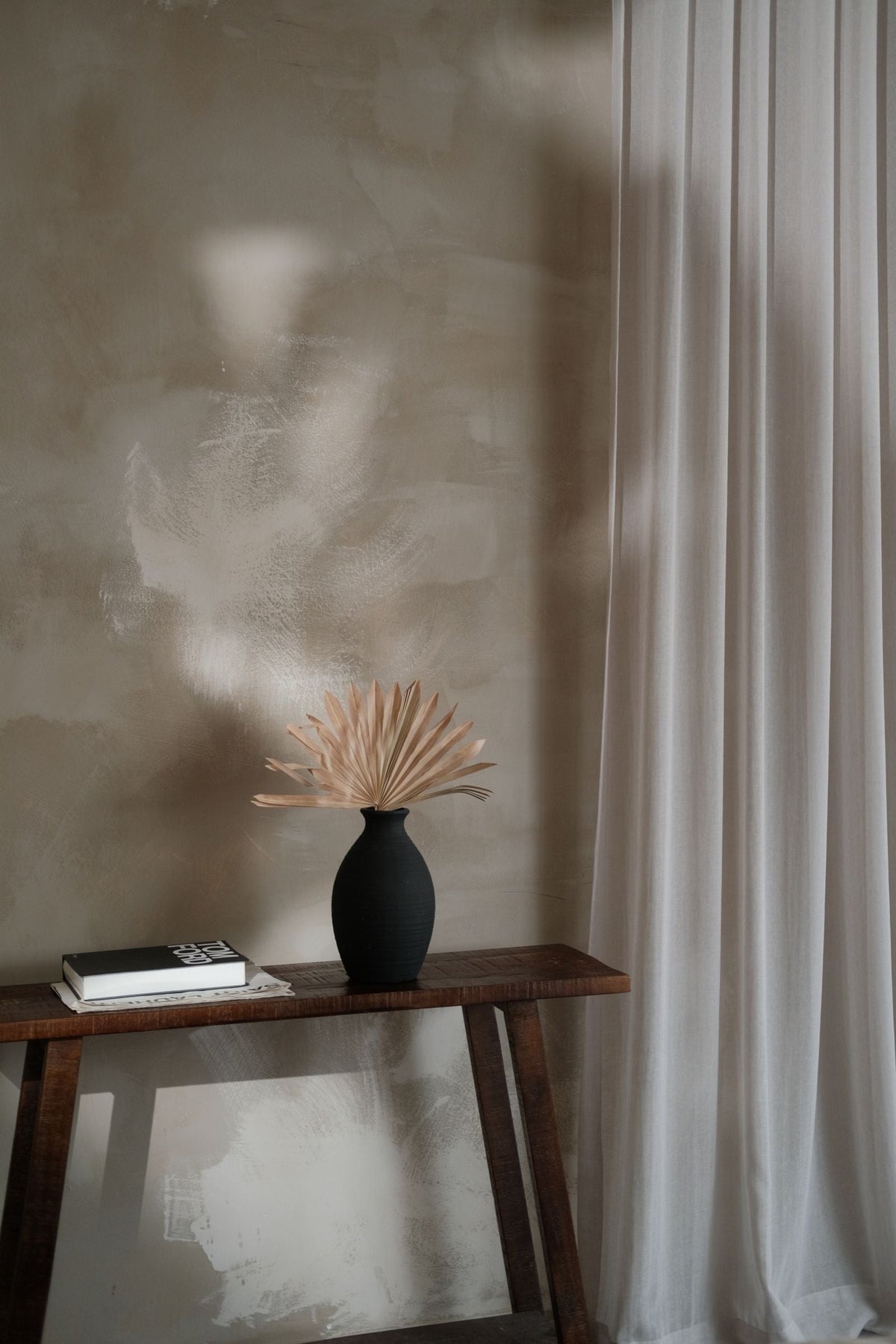
Venetian plastering for architects and specifiers comes down to a few decisions made early, which material, which substrate, what level of polish and where the finish must stop. Zavoré installs Venetian plaster on projects across London, Birmingham, Manchester and the UK with our own artisans, supplies the materials and trains applicators, and we can help a design team set out those decisions before tender.
Our Venetian plaster installation page describes how a job runs on site, while Venetian plastering across the UK maps the regions we cover. This article is written for architects, interior designers and specifiers who want to get the finish right on paper first.
Venetian plaster is a family of thin, hand trowelled finishes made from lime and marble or from acrylic binders. The traditional lime version breathes, letting moisture move through the wall, which is why it suits solid masonry in older buildings. Acrylic versions form a film over the surface. Neither is wrong, but they suit different situations, and specifying one where the other belongs can cause problems.
Within the family, the finishes most often specified are these.
Every one of these gives a stone or marble look without being stone or marble. A specification should describe the finish honestly, as a thin decorative coat over a prepared wall.
Most failures in decorative plaster start beneath it. A good specification addresses the wall, not only the finish.
Polished finishes show every dip. Describe the flatness the finish needs and make it the responsibility of the trade preparing the wall, so the decorative plaster is not asked to correct a poor substrate.
Colour and sheen are impossible to judge from a swatch on screen. Colours are taken from our range of 48 or matched to an NCS reference, and a physical sample showing that colour at the agreed sheen is signed off before any dates are fixed. On a project with several rooms or phases, that approved sample becomes the benchmark everyone works to. A sample board is a sensible first step for the design team to narrow choices before a full sample is made.
Clients and design teams can also see finishes at our London showroom and training centre by appointment.
Programme the decorative plaster as one of the last trades. It goes well when electrics, joinery and wet trades are finished, fresh plaster or screed has dried, and the building is heated and dry. Cold, damp conditions slow drying. Protection of floors and joinery should be allowed for, and access, parking and working hours need clarifying early on occupied or managed buildings, since most have management rules on working hours and deliveries.
Installations are booked as continuous blocks of days, keeping one team of artisans on the work throughout. That continuity matters for a hand applied finish, because each applicator has a recognisable rhythm in the trowel marks.
Inside a shower enclosure, Venetian plaster is the wrong material. Specify tadelakt there, or microcement over a waterproofed wall. Microcement becomes washable once sealed, yet the shower wall behind it must still be tanked. Outside the splash zone, Venetian plaster works happily on bathroom and cloakroom walls.
In listed buildings, listed building consent is generally needed for works that affect a listed building's character, so check with the local planning authority. For flats, many leases need the freeholder's permission, so the client should check theirs. Lime is caustic, which is worth noting in method statements for occupied buildings.
For a practice, the useful question is not who is nearest but who can carry a specification through to site without changing it. Ask whether the installer surveys and lays the work with their own people, whether the same team stays on the project, how a signed off sample is kept as the benchmark, and how preparation responsibilities are split. We work throughout the country, including London, Birmingham and Manchester, and our Venetian plaster page sets out the finishes in more detail.
We do not issue rates from drawings alone. The order is photos, drawings and rough measurements, followed by a site survey, and only then a written price. That keeps the figure tied to real conditions rather than assumptions. On tendered work, it helps to share the preparation specification early so the price reflects what the decorative plaster will sit on.
Lime suits solid masonry and period buildings because it breathes. Acrylic forms a film and can suit some modern substrates. We recommend the system once we know the wall build up and how the room is used, and we can explain the reasoning to the design team.
Yes. Receptions, corridors, hotel rooms, restaurants and offices all use it. After sealing and waxing the surface can be wiped down, and localised repairs can be made. High traffic areas need a sensible choice of finish and careful detailing at corners and edges.
Plan stops at corners, changes of plane, skirtings, shadow gaps or beads, rather than across a flat wall. Clean junctions look deliberate and are easier to repair. We can talk through details for a project at the survey stage.
Yes. Training is face to face at our Birmingham Academy, opened in 2023, and at the London and Manchester centres. The Beginner Course takes 3 days, the Advanced Course 4 days, and 1 to 1 Training 3 days, with materials supplied on every course.
If you are specifying Venetian plastering on a project, our number is +44 7592 929191, or send drawings, site photos and approximate measurements to sales@zavore.co.uk, and we will reply about samples and a survey.
Guidance for homeowners who want to limewash their own cottage or old home, and how to ask Zavoré about limewash training.
Artificial RockA guide to plaster finishes for Surrey pool rooms, home spas and garden rooms, covering tadelakt and microcement in humid spaces, artific...
Holiday LetsWhich plaster finishes suit holiday lets in coastal Kent and Sussex towns, with tadelakt and microcement for bathrooms, limewash for bedr...
Brighton and HoveA guide to lime plaster and Marmorino in Brighton and Hove Regency homes, covering tall rooms, cornice, sea air and why listed building c...
BuckinghamshireHow to choose finishes for a barn conversion in Buckinghamshire or Hertfordshire, from lime plaster that copes with timber frame movement...
Abu DhabiHow to order Venetian plaster for sites in Al Dhafra, from samples and quantities to tracked delivery, import duty or tax, receiving and ...

Providing luxury finishes for the most prestigious addresses in the world
Venetian plaster, limewash, microcement, tadelakt, metallics, sculptural plaster and gold leaf, supplied and installed by our own team, with Venetian plaster taught at our Birmingham studio.
One list, run by the people who make the material. No noise, and nothing we would not want to read ourselves.
We email as the house has something worth saying, never daily. Unsubscribe from any email, or reply STOP to any text. We never pass your details to anyone.