

✦
Where Artistry Begins
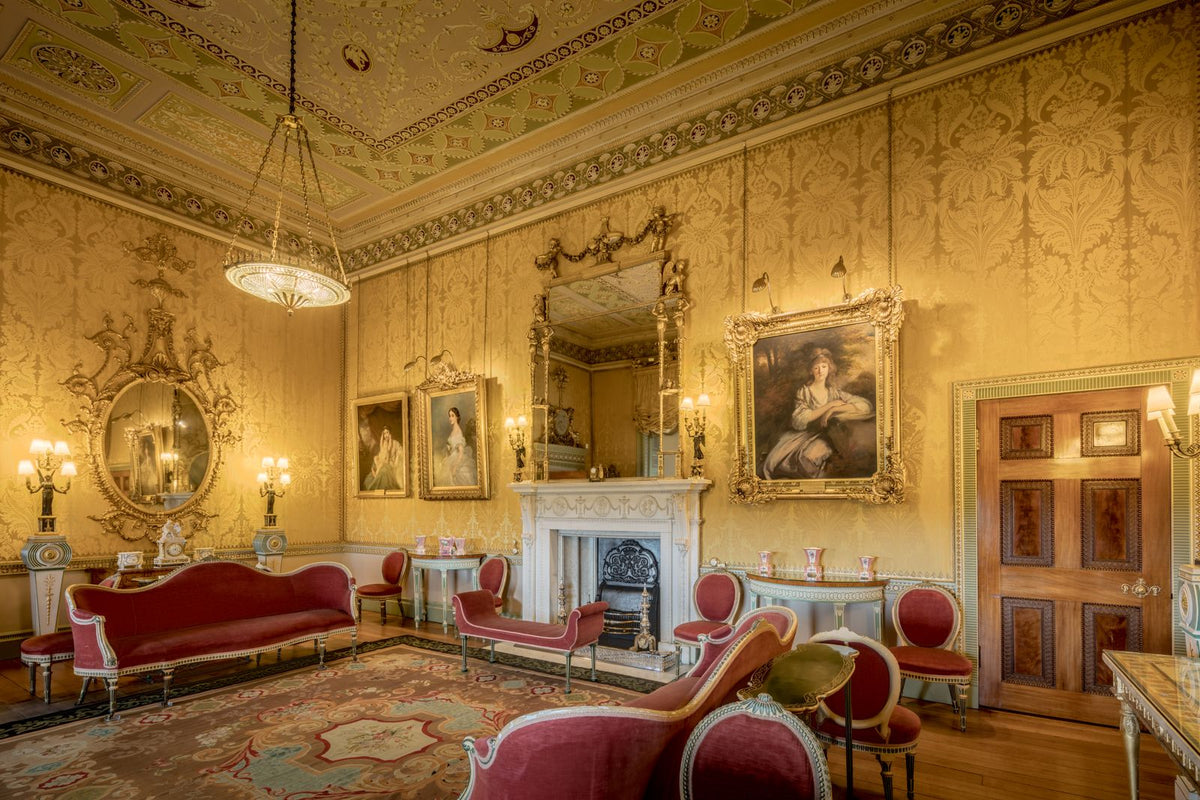
Venetian plastering on high ceilings and double height walls is entirely possible, but it is planned differently from an ordinary room, because one continuous polished plane has to be worked from safe access without visible breaks. Zavoré carries out this kind of Venetian plastering in UK homes with our own artisans, using towers or scaffold so every coat of lime and marble can be laid and burnished in one flowing sequence.
The way we run any job, from first photos to the final wax, is set out on our Venetian plaster installation page, and the material itself is explained on our Venetian plaster page. To check where our artisans can reach, see Venetian plastering across the UK.
Tall walls turn up in more places than you might think. Victorian and Edwardian houses have stairwells that rise two or three storeys, with a long wall running past every landing. Georgian townhouses often have grand first floor drawing rooms with ceilings well above standard height. Converted barns and chapels open up to the roof ridge, and many contemporary houses and extensions are designed around a double height entrance hall or a galleried living space with glazing from floor to ceiling.
Each of these makes a wonderful setting for a polished wall. The same scale that makes them striking also means the work cannot be treated like decorating a bedroom.
Access is the first thing the survey settles. For a stairwell we often need a stair scaffold or a bespoke platform that spans the flight, so the artisans can stand level at each height. In an open hall a mobile tower may do. In a barn or atrium with very tall walls, full scaffold is usually the safe choice. Whatever is used, it has to let us work across the whole width at each level and move down smoothly as the coat progresses.
The access affects floors and finished joinery too. Stair treads, banisters and new oak floors need protecting under any structure, and we want to know about glass balustrades, light fittings and window blinds before arriving.
Venetian plaster is laid wet on wet in thin passes, and each pass needs to blend into the last while it is still workable. On a small wall that is easy. On a large one, the artisans must plan a working order that keeps a live edge moving across and down the surface so the trowel strokes flow without a visible seam. Stopping halfway down a coat and returning the next day is exactly what we avoid.
That is why we schedule tall walls in blocks of days with the same artisans throughout. More hands on the scaffold at once also helps on very wide planes, keeping the edge open while each person works their band.
Yes. A polished ceiling bounces light around a room and looks especially fine above a dining table or in a stairwell where you look upward. Working overhead is slower and more demanding than walls, and flatness is critical because light skimming across a ceiling exaggerates every ripple. Plasterboard ceilings need their joints reinforced and the right primer before any decorative coat, and old lath and plaster ceilings must be checked for sound bond first.
For a softer effect overhead, many people choose marmorino or limewash, which have less sheen and are more forgiving of a slightly irregular period ceiling.
Most issues come from rushing or under planning. Inadequate access leads to stretched reaching and uneven pressure, which shows as patchy sheen. Draughts through an open stairwell or a roof light can dry one area faster than another. Heat rising to the top of a tall space can make upper sections set quicker than the lower ones, so we look at heating and ventilation before we start.
Movement is the other risk. Tall walls in new builds and extensions may still be settling, and timber framed barns flex with the seasons. A survey checks for cracks and helps decide whether to wait, reinforce or choose a more flexible approach.
It usually costs more per square metre than a standard wall, because access equipment, protection and a more demanding working order all add time. The size and condition of the wall still decide most of the figure. We price only after a survey, once we know what access and preparation the space needs.
It depends on the area, the number of coats, how much the wall needs preparing and how fast each layer sets in your conditions. We do not quote in weeks beforehand. At the survey we work out a block of days and agree dates after you approve the sample.
Usually, yes, though the stair may be partly blocked by scaffold or a platform for a while. We plan safe routes and protection with you in advance. If the stair is your only way up and down, we will talk through how to keep access open around the working times.
Often it is the right choice, because lime lets old masonry and timber breathe. Barns can be uneven and may move, so the survey looks at cracks and dampness first. A softer finish such as marmorino or limewash is often kinder to an irregular old wall than a mirror polish.
For advice on Venetian plastering a high ceiling or double height wall, email photos of the space, its rough height and width to sales@zavore.co.uk or ring +44 7592 929191. A sample board helps you see how a colour reads in a tall, bright room.
How painting companies in Dubai can order Lime Paint for villa repaint work, with colours tinted room by room, labelled tubs and tracked ...
ContractorsHow plastering contractors can add microcement, tadelakt, limewash and Venetian plaster through Zavoré 1 to 1 Training, group courses of ...
Abu DhabiIf you searched for Venetian plaster paint for a villa in the UAE, here is what we actually supply, which real plaster to order instead a...
CoursesWhat three days on the Zavoré tadelakt course involve, from the base and radiused corners to the burnishing window, the stone, the soap a...
CoursesAn honest look at general plastering courses against the Zavoré Beginner Course in Venetian plaster at our Manchester centre, who each su...
Abu DhabiWhere Venetian plaster belongs in an Abu Dhabi villa bathroom, which finish takes over in the wet zone, and how the walls are sealed, sur...

Providing luxury finishes for the most prestigious addresses in the world
Venetian plaster, limewash, microcement, tadelakt, metallics, sculptural plaster and gold leaf, supplied and installed by our own team, with Venetian plaster taught at our Birmingham studio.
One list, run by the people who make the material. No noise, and nothing we would not want to read ourselves.
We email as the house has something worth saying, never daily. Unsubscribe from any email, or reply STOP to any text. We never pass your details to anyone.