

ZAVORÉ
ZAVORÉ
✦
Where Artistry Begins
Tracked delivery, UK and worldwide, from our studio·Every tub tinted to your exact colour·Damaged in transit, we replace it, 30 days·Speak to a specialist · 07592 929191·Installed by our own team, homes and businesses·Trade accounts · 10% and rewards·Courses at the studio · small groups·Showroom · visit by appointment·Tracked delivery, UK and worldwide, from our studio·Every tub tinted to your exact colour·Damaged in transit, we replace it, 30 days·Speak to a specialist · 07592 929191·Installed by our own team, homes and businesses·Trade accounts · 10% and rewards·Courses at the studio · small groups·Showroom · visit by appointment·
Home/The Journal/Mosaic Splashbacks and How to Grout Mosaic Tiles
05 October 2026

Mosaic Splashbacks and How to Grout Mosaic Tiles

Mosaic Splashbacks and How to Grout Mosaic Tiles

A mosaic splashback is one of the simplest ways to add colour and detail to a kitchen, bathroom or bar, because it covers a small area that everyone looks at. Grouting mosaic tiles well comes down to a few rules. Choose the grout for the room, let the adhesive cure first, work in small sections, press grout fully into every joint, and clean the face of the tiles before the grout sets. This guide covers ideas for each room, which materials cope near heat and water, and a grouting method that follows manufacturer guidance.

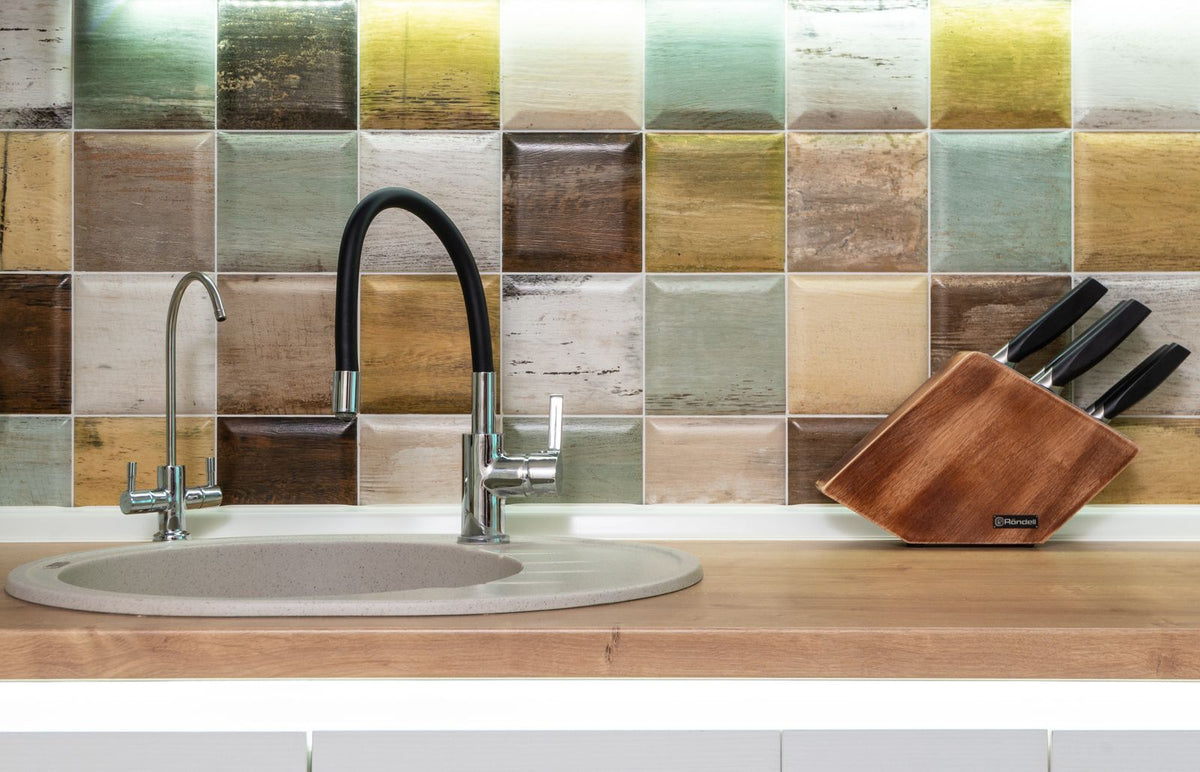
Kitchen with a round white sink and black tap against a multicoloured square tiled splashback
A multicoloured square tiled splashback behind a kitchen sink

Mosaic splashback ideas for kitchens, bathrooms and bars

Because a splashback is a contained area, you can be braver with it than with a whole wall.

  • Kitchens. A mosaic kitchen splashback can run from worktop to the underside of the wall cupboards, or go all the way up to the ceiling behind open shelves. A single colour in small squares looks calm and modern. A marble basketweave or herringbone suits a classic or period kitchen. A framed panel behind the hob, with a border around it, turns the cooker into the centrepiece of the room.
  • Bathrooms. A mosaic splashback behind a basin is small enough to justify a richer material. Glass is ideal where water splashes every day, and it pairs well with plaster or microcement on the walls around it.
  • Bars and home bars. Bars are where mosaic wall art comes into its own. A bespoke mosaic can carry a pattern, a picture, or a logo or name, and it stands up to splashes better than paint or paper.
Wall of small multicoloured square tiles in a geometric pattern, Stratford, London
Small multicoloured square tiles in a geometric pattern, Stratford, London

Which materials cope near heat and water

Most splashbacks see water, grease and cleaning every day, and some sit close to a hob, so the material matters.

  • Glass is non absorbing, so splashes and grease wipe off the surface rather than soaking in. It is a strong choice behind a sink or basin. Behind a hob, check the tile maker's guidance on heat and the cooker maker's required clearances before you commit.
  • Porcelain and ceramic are dense and easy to clean, and are a practical choice for a hard working cooking area.
  • Marble looks beautiful but is porous and sensitive to acid. Lemon juice, vinegar and wine can etch the surface, and sealing reduces staining but does not prevent etching. In a busy kitchen, many people keep marble mosaic away from the main prep area or accept that it will gain a lived in patina.

Grout matters just as much as the tile. In kitchens, epoxy grout is often chosen because it resists stains and chemicals far better than cement based grout, which is porous and usually needs sealing.

How to grout mosaic tiles

Every grout brand has its own mixing ratios, working times and cleaning advice, so always read the instructions on the bag or tub first. The method below follows the pattern that manufacturers set out.

Before you grout

  • Leave the adhesive to cure for the time the adhesive maker states. Grouting too soon can move tiles and trap moisture.
  • If the mosaic came with a paper face, soak and peel it off once the adhesive allows, then tap the sheets flat with a wooden beating block. Clean any adhesive out of the joints and off the face.
  • Seal natural stone such as marble before grouting, so the grout cannot stain the surface.
  • Leave the joint where the splashback meets the worktop, and any internal corners, free of grout. These are finished with flexible silicone later.

Applying the grout

  • Mix only as much as you can use within the working time. Epoxy grout in particular sets quickly and behaves very differently from cement grout.
  • Work a small area at a time. Spread the grout with a rubber float held at about 45 degrees and push it diagonally across the joints, so it fills them fully without dragging out of the gaps.
  • Scrape off the excess by holding the float almost upright and drawing it diagonally across the tiles.

Cleaning off

  • Clean each section once the grout begins to firm, following the grout maker's timing. Use a clean, damp sponge, rinsed often, wiping diagonally so you do not pull grout out of the joints.
  • Epoxy grout needs the specific cleaning method its maker gives. Any residue left to cure on glass or polished stone is very hard to remove.
  • Once dry, buff off any haze with a soft cloth, then run silicone along the worktop joint and corners.
  • If you used a cement based grout, seal it once it has fully cured, according to the sealer instructions.
Close view of bright multicoloured square mosaic tiles and grout lines
Close view of multicoloured square mosaic tiles and the grout lines between them

Cleaning and caring for a mosaic splashback

Day to day care is simple if you match the cleaner to the material.

  • Glass and porcelain clean well with a standard non abrasive cleaner and a soft cloth or sponge. Avoid scourers, which can scratch glass.
  • Marble and other natural stone need a pH neutral stone cleaner. Keep acidic and household descaling products away from them.
  • Wipe grease from behind the hob regularly rather than letting it build up in the joints.
  • Reseal stone and cement based grout from time to time, as the sealer maker advises.

Mosaic wall art beyond the splashback

Mosaic has decorated walls for centuries, from Roman floors to the gold vaults of Venice, and the same idea works at home on a much smaller scale. A bespoke mosaic can turn a splashback, a bar front or a hallway wall into a picture, a monogram or a pattern drawn for that room. Zavoré designs bespoke mosaics and supplies ready made ones, and installs both, including mosaic you have bought elsewhere. You can see the range on our mosaics page, and our feature wall ideas show how mosaic sits alongside plaster, murals and relief.

Interior of St Mark's Basilica with ornate gold mosaics across the vaults and arches, Venice
Interior of St Mark's Basilica, Venice

Questions we get asked

Should I use epoxy or cement grout for a kitchen splashback?

Epoxy grout is the more stain resistant option and does not need sealing, which suits kitchens and glass mosaic. Cement based grout is easier to apply and fine for many splashbacks, but it should be sealed once cured and may need resealing.

Can I grout mosaic tiles myself?

Cement based grout on a small splashback is a reasonable DIY job if you follow the instructions and work in small sections. Epoxy grout is less forgiving, and many people prefer a professional fixer for it.

Can mosaic go behind a hob?

Often, yes, but check both the tile maker's guidance for heat and the cooker maker's clearance requirements first. Porcelain and ceramic mosaic are practical choices there.

Can you make a mosaic with our logo for a bar?

Yes. Zavoré designs bespoke mosaics, including logos, pictures and patterns, and installs them.

Where to go next. See ready made and bespoke options on our mosaics page, read our guide to mosaic bathroom tiles in glass, marble or stone, or contact us to talk through your splashback. You can also call or WhatsApp 07592 929191, or email support@zavore.co.uk.

Back to the Journal
For The Trade Three ways to earn with us
Trade accountTen percent off every material in the shop, and a specialist on the phone. Partners & affiliatesGet listed where customers find you, or sell our materials and earn on every order. The Rewards RoomEvery order earns. Samples, tools and an apron, on the house.
Free to join · we reply within 24 hours