

✦
Where Artistry Begins
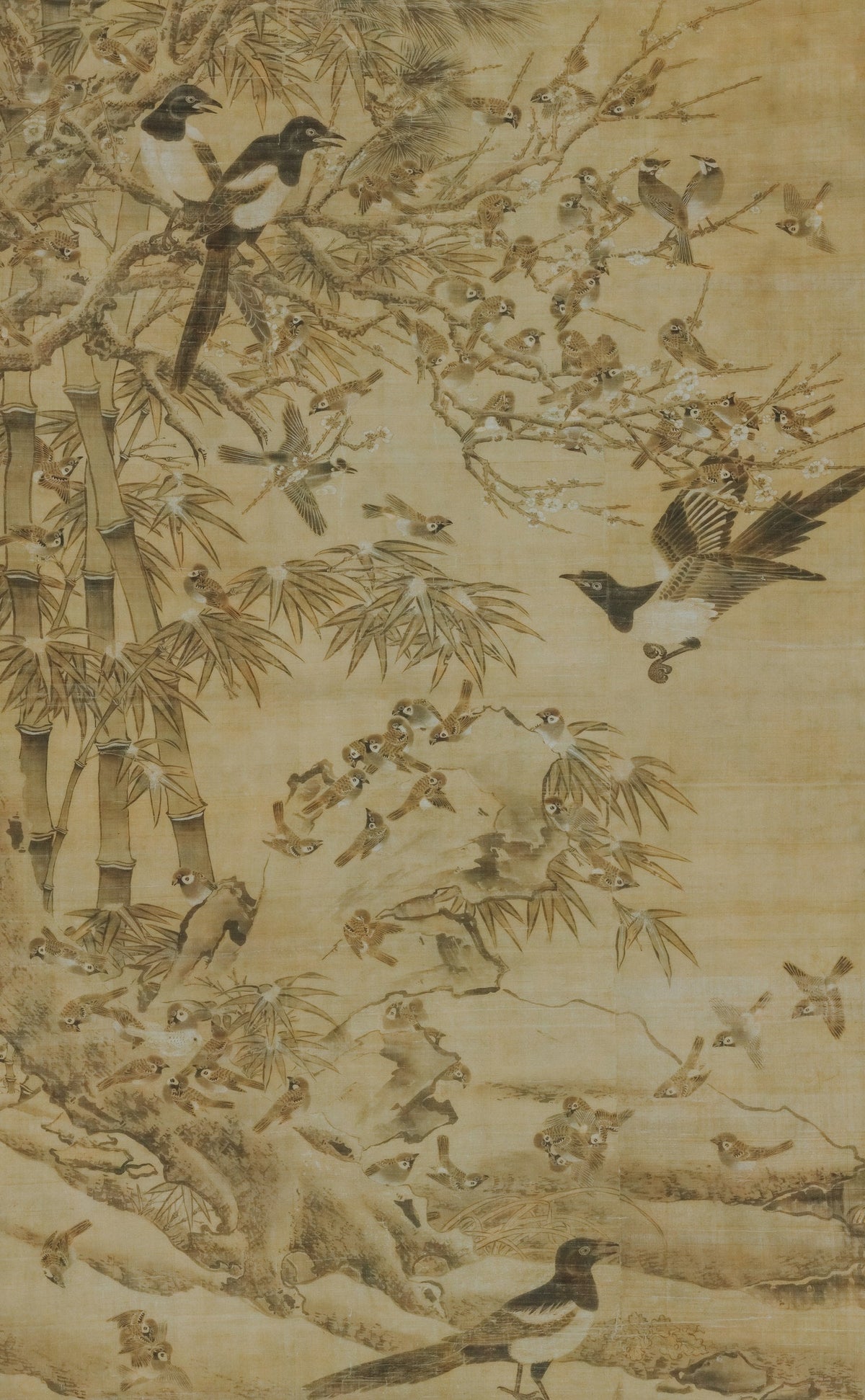
Chinoiserie wallpaper comes in three forms. Printed rolls repeat a pattern and are the most affordable. Hand painted wallpaper panels are made in a studio and hung like paper, with each sheet different. A hand painted wall mural is painted straight onto your wall, so the branches, birds and blossom are drawn to fit that room and nothing repeats. Which is right depends on how much the room matters to you, how long you plan to stay, and whether you want something nobody else has.

Chinoiserie is the European taste for Chinese motifs and techniques, which grew as Chinese goods reached Europe through trade. In wallpaper it usually means one of a few familiar subjects. Flowering trees with birds and butterflies among the branches, known as bird and flower designs. Landscapes with pavilions, bridges and water. Scenes of daily life, such as the growing and packing of tea. The style mixes real Chinese painting traditions with a European idea of what China looked like, which is part of its charm.
According to the V&A, the first Chinese wallpapers went on sale in London in the late seventeenth century, and the fashion lasted for more than a century. They were not rolls with a repeat. They came as sets of sheets, each different, that a skilled paper hanger joined into a continuous scene running around the room.
The National Trust looks after the largest collection of historic Chinese wallpapers on permanent public display in the world, across eighteen of its houses, and they show how the craft developed.
From the late 1750s, fully hand painted papers took over from printed ones. Several painters worked on each sheet, each specialising in one part, such as architecture, rockwork, foliage or figures. English and French makers soon produced cheaper imitations, and early copies often fell back on a repeating pattern, which is exactly what the Chinese originals avoided.

Printed rolls are the most affordable route and quick to hang. The design repeats down the roll, so you will see the same bird or branch appear at regular intervals, and the colours sit flat on the surface. For a cloakroom or a short term home they can look very pretty.
Hand painted panels follow the historic method. Each panel is painted in a studio, usually on paper or silk, and then hung in order to build a continuous scene. They have the depth and variation of real brushwork, but the design is planned on flat sheets away from the room, and seams and fixed panel widths have to be worked around doors, windows and chimney breasts.
A mural is painted by hand, on site, directly onto the wall. The composition is drawn to the room itself, so a branch can curl around a doorway, a bird can perch above a light switch, and the main tree can sit exactly where your eye lands as you walk in. There are no seams and no repeat. This is how Zavoré works. Our painters create chinoiserie murals by hand in your home, along with florals, landscapes and scenes, and we can seal a mural in a busy area such as a hallway or dining room so it can be wiped. You can see more on our murals page.
The background colour changes the whole mood of chinoiserie. A soft green, blue or cream ground feels light and garden like. A gold leaf ground glows in lamplight and gives an evening room real warmth. Silver leaf is cooler and quieter, and suits greys, blues and pale woods. Grasscloth adds a woven texture behind the painting, which softens it and makes it feel more relaxed.
Zavoré can paint chinoiserie straight onto the wall, or onto a gold leaf, silver leaf or grasscloth background, so the ground and the painting are designed together.

If you are planning a wider scheme, our feature wall ideas and our guide to trompe l'oeil show other painted and plaster finishes that sit well beside chinoiserie.
No. Most chinoiserie wallpaper sold today is printed. Hand painted panels and murals painted on the wall are the hand made options, and each piece is different.
Yes. Many people choose one wall, such as behind a bed or a dining table. Painting on site means the design can stop neatly at a corner or carry on round the room.
Zavoré can seal murals in busy areas so they can be gently wiped. Ask us about this when you plan the design.
Yes. Zavoré works across the UK, including London, Birmingham and Manchester.
Where to go next. See how we work on our hand painted murals page, explore our feature wall ideas, or get in touch to talk about a chinoiserie mural for your home. You can also call or WhatsApp 07592 929191, or email support@zavore.co.uk.
How to judge a plaster colour properly: boards in the specified finish, upright in the room, in daylight and lamplight, and never while s...
CareA pastellone floor is a seamless lime floor laid wet and polished as it sets. What goes underneath it, how the binder works, and wax agai...
CareWhich decorative plaster finishes stand up to hallway traffic, how to protect corners and seal the surface, and what changes when the wal...
CostPolished concrete is a ground slab; microcement is a thin coating over what you already have. Which one your building can take, and what ...
FinishesHow to pick the right wall for Venetian plaster in a living room, set the sheen from where people sit, and detail a chimney breast or med...
CareWhy bedrooms want a matt or low-sheen lime finish, which materials suit a headboard wall, how to choose colour, and how to deal with dust...

Authentic Venetian plaster, machine-tinted to your colour and made for each order. Materials, installation and master-led training, nationwide and international, since 2021.
One list, run by the people who make the material. No noise, and nothing we would not want to read ourselves.
We email as the house has something worth saying, never daily. Unsubscribe from any email, or reply STOP to any text. We never pass your details to anyone.