

✦
Where Artistry Begins
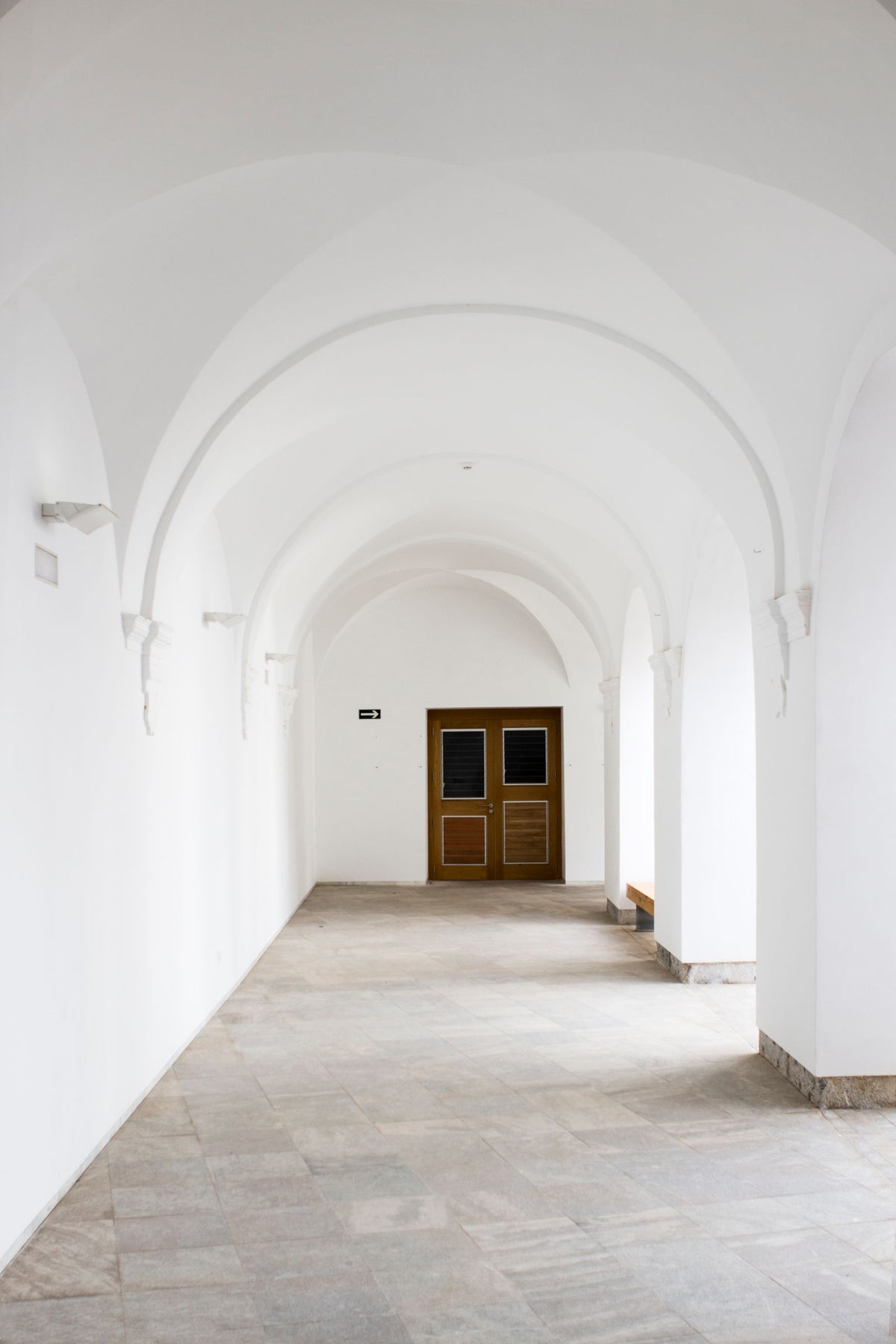
Choosing plaster for an Omani home usually comes down to four lime finishes, and Zavoré installs all of them anywhere in Oman with our own artisans. They are Venetian plaster, marmorino, tadelakt and limewash. Each is made from lime rather than a coating that sits on the wall as a film, and each answers a different room, from a glossy majlis wall to a burnished shower. Below we set out how they differ and what a wall needs first.
The overview on our Venetian plaster page links the polished, marmorino and travertino finishes, and Venetian plastering in Oman explains how we plan work across the country, from Muscat and Seeb to Nizwa and Salalah. Oman has a long building tradition in stone, mud brick and lime, so a mineral wall is nothing strange here. What has changed is the choice of colour, grain and sheen.
The base coat on most new walls is there to make a surface flat and ready for decoration. It is not meant to be seen. A decorative lime finish is the decoration itself. It is laid in thin coats, worked by hand and left exposed, so the trowel or brush marks become part of the look.
Paint is different again. Most modern emulsions are acrylic, and acrylic forms a film over the wall. Lime does not. It soaks into a mineral surface and hardens with it, which is why it is described as breathing. That matters on solid block and render walls, because a breathable finish lets the wall give off moisture rather than trapping it behind a skin.
Venetian plaster is lime mixed with finely ground marble. Laid in several thin coats and burnished with a steel trowel, it builds a cloudy depth that reads a little like stone. Our polished plaster is the higher sheen version of the same idea. The coats are close to transparent, so the colour seems to sit inside the wall rather than on it.
Good places for it include a majlis, an entrance foyer, a stair wall, a dining room, a fireplace wall or the wall behind a bed. The catch is flatness. A polished finish shows every dip and ripple, so a wall that looks fine under paint may need filling and skimming first. It also does not go inside a shower or a steam room.
Marmorino has a visible, stone like grain and a soft, satin face rather than a mirror shine. Our marmorino page shows the look. It is forgiving of curves, which is why it pairs so naturally with arches, alcoves and niches. Much of Oman is built as low rise villas in sand, cream and white tones, and marmorino in warm earthy colours tends to sit comfortably in that setting.
Tadelakt comes from the hammam tradition of North Africa. The lime is burnished with a smooth stone, with no film or sealer laid on top, and corners are formed rounded rather than sharp. See our tadelakt page for where it goes. Showers, wet rooms, steam rooms, basins, niches and benches all suit it.
It is not a waterproofing system on its own. The wall behind a shower is waterproofed and rendered first, and tadelakt never goes straight onto plasterboard in a wet area. It also dislikes bleach, acids and limescale sprays, and every wall will show some natural variation.
Our limewash is brushed on rather than trowelled, and it dries to a soft, cloudy, completely matt wall. It needs a mineral, absorbent surface to grip, so it will not take on vinyl silk, gloss or a sealed skim, and emulsion has to be stripped back or covered with a mineral primer. It is soft and not washable, which makes it a choice for bedrooms, sitting rooms, hallways and a majlis rather than a splashback.
Rooms in Oman are generally air conditioned, and we talk through the building, the climate and how the room is used at the survey. A sample in your chosen colour, seen in the room itself, settles most questions about sheen.
Solid block, render and stone are the natural backing for lime. Plasterboard can work for the dry finishes, but its joints need reinforcing and the right primer. Old paint, loose render and damp patches are dealt with first. Lime is caustic while wet, so the work is done with gloves and eye protection, and children and pets are kept clear.
Our process is the same for every finish. You send photos, drawings and rough measurements. We survey before giving any price, prepare a sample for you to approve, and only then agree dates. The work runs in blocks of days so the same artisans carry each wall from preparation to the final coat. Colours come from 48 house shades or any NCS reference, and the sample board is the easy way to compare them.
Yes, for the lime plasters, limewash and lime paint. They are sent from the UK through the shop, tinted to the approved sample and posted on a tracked service. Delivery is quoted individually, and any import duty or tax is set by Oman and paid by the buyer.
No. It contains finely ground marble bound in lime, and burnishing gives it a marble like depth, but it is a plaster laid in thin coats. Because it is trowelled on, it can follow curves and arches that a cut stone slab would struggle with.
Usually not straight on. Lime needs a mineral surface it can bond to, so a painted wall is either stripped back or prepared with a suitable primer first. We say which applies to your wall at the survey, after looking at the existing finish and what lies beneath it.
Polished plaster and marmorino are harder wearing than limewash and can be waxed for extra protection. Limewash is lovely but soft, so it marks if it is handled often. For a hallway used all day, a waxed marmorino is often a sensible middle ground between looks and toughness.
Yes. Our own artisans install anywhere in Oman, in villas, apartments, majlis rooms, offices and hotels. Send photos, rough measurements and the location, and we will reply with the next steps and suggest a sample to start with.
If you are weighing up finishes for an Omani home, call +44 7592 929191, Monday to Saturday from 9am to 6pm UK time, or email sales@zavore.co.uk with photos of the rooms, rough measurements and the location. We will tell you plainly which plaster suits each wall.
Polished plaster, marmorino and travertino for Salalah hotel lobbies, reception desks and suites, planned around guests and the hotel rules.
GuidesStone slabs or polished plaster for a marble look in an Omani villa? We compare weight, joints, curves, repairs and colour so you can cho...
Clay PlasterA guide to finishing the tall walls of a converted barn in Worcestershire with clay plaster or Marmorino, including oak beams, new insula...
Black CountryHow concrete effect plaster brings an industrial look to homes in Wolverhampton and the Black Country, without the weight of real concrete.
LimewashA practical starter kit of tools for limewash work, what each one does, and how to ask Zavoré about limewash training.
KentA practical guide to mixing several plaster finishes in one Kent house, matching each to the room, keeping a colour thread through the ho...

Providing luxury finishes for the most prestigious addresses in the world
Venetian plaster, limewash, microcement, tadelakt, metallics, sculptural plaster and gold leaf, supplied and installed by our own team, with Venetian plaster taught at our Birmingham studio.
One list, run by the people who make the material. No noise, and nothing we would not want to read ourselves.
We email as the house has something worth saying, never daily. Unsubscribe from any email, or reply STOP to any text. We never pass your details to anyone.